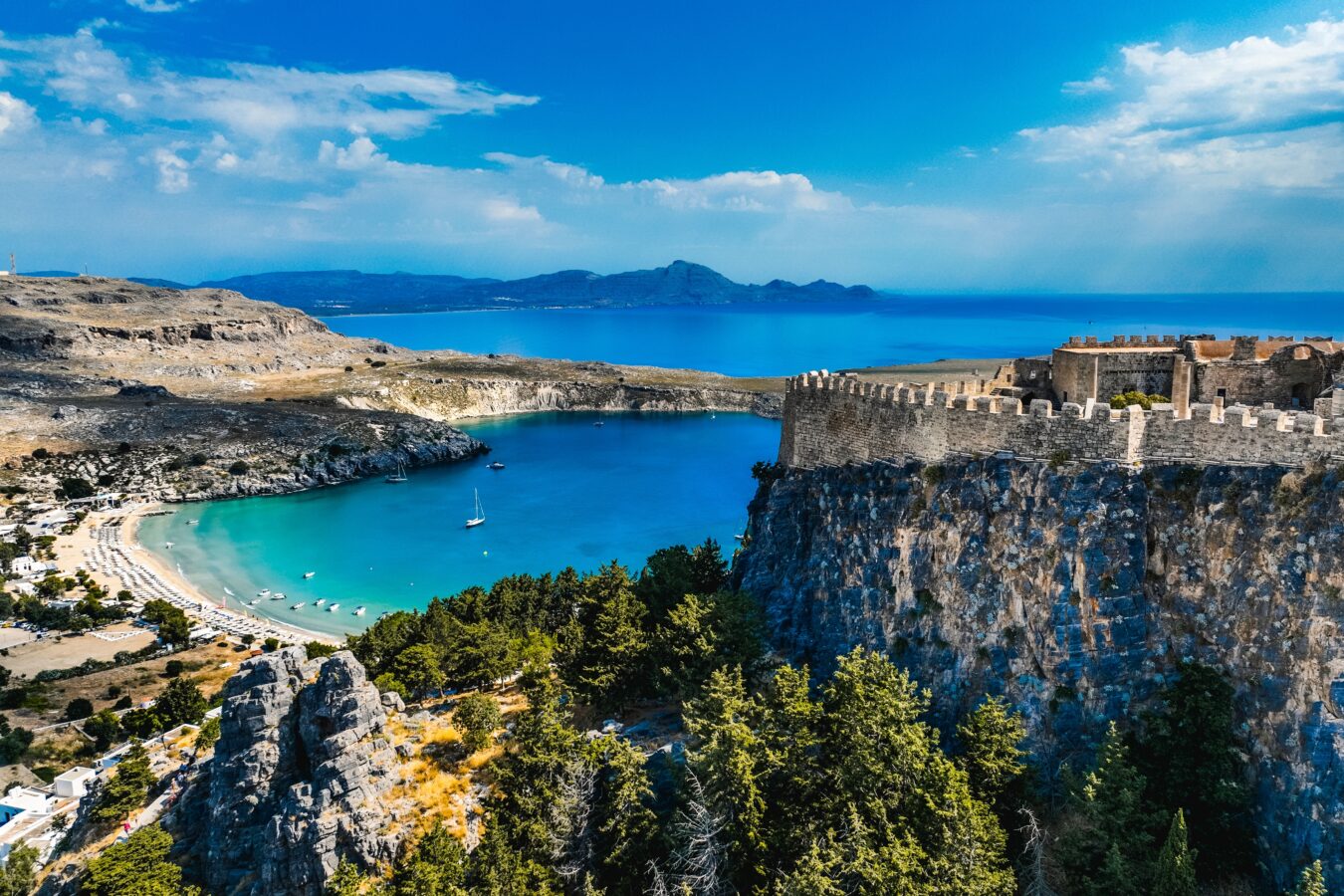
Ancient Greek Archaeological Sites in Rhodes
Ruins, Legends & Living History
From ancient settlements to enduring legends, the ancient Greek archaeological sites in Rhodes reveal an island shaped by centuries of civilisation.
Rhodes is a destination best understood through its layers. Beyond its beaches and contemporary rhythm, the island holds a remarkable concentration of ancient sites in Rhodes Greece, where traces of early civilisations remain visible across landscapes that have evolved but never lost their connection to the past. Exploring these sites offers more than historical insight; it reveals how the island has been continuously inhabited, shaped, and redefined over time.
Ancient Greek Archaeological Sites in Rhodes: Exploring the Island Through Time
To explore Rhodes through its ancient sites is to move between different eras without leaving the island. From elevated acropolises to structured settlements and enduring legends, each location offers a distinct perspective on how life once unfolded and how its influence remains present today.
Why Rhodes Is Unique for Ancient History
Rhodes stands apart from many Greek islands due to the continuity of its historical presence. The ancient cities of Lindos, Kamiros, and Ialyssos formed the foundation of the island’s early civilisation, each contributing to its cultural and economic development. Over time, these settlements evolved rather than disappeared, creating a landscape where different historical periods coexist.
This layering becomes particularly evident when moving between archaeological sites and the Medieval City of Rhodes, where ancient foundations meet later architectural additions. Walking through these spaces offers a deeper understanding of how Rhodes has transitioned across centuries while maintaining a clear sense of identity, something also explored when exploring Rhodes Old Town in greater depth.
The Most Important Ancient Greek Archaeological Sites in Rhodes
Acropolis of Rhodes & Ancient Stadium
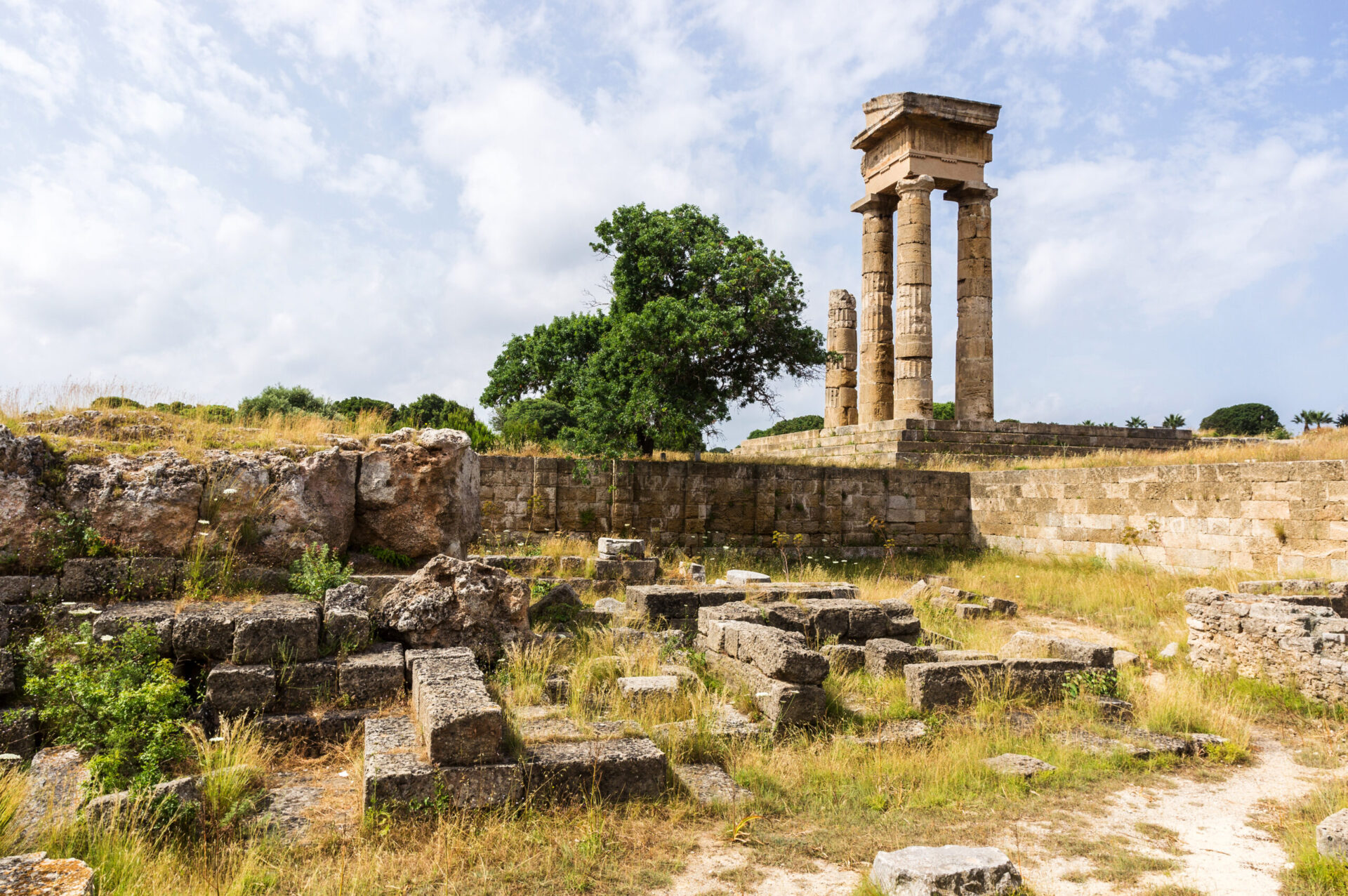
Set above Rhodes Town, the Acropolis of Rhodes offers a more open and expansive archaeological setting compared to the denser sites found elsewhere on the island. Here, the remains of the Temple of Apollo stand alongside the Ancient Stadium Rhodes, where athletic events once took place. The elevated position creates a sense of distance from the city below, allowing the site to be experienced with a degree of quiet that is often unexpected.
Ancient Kamiros
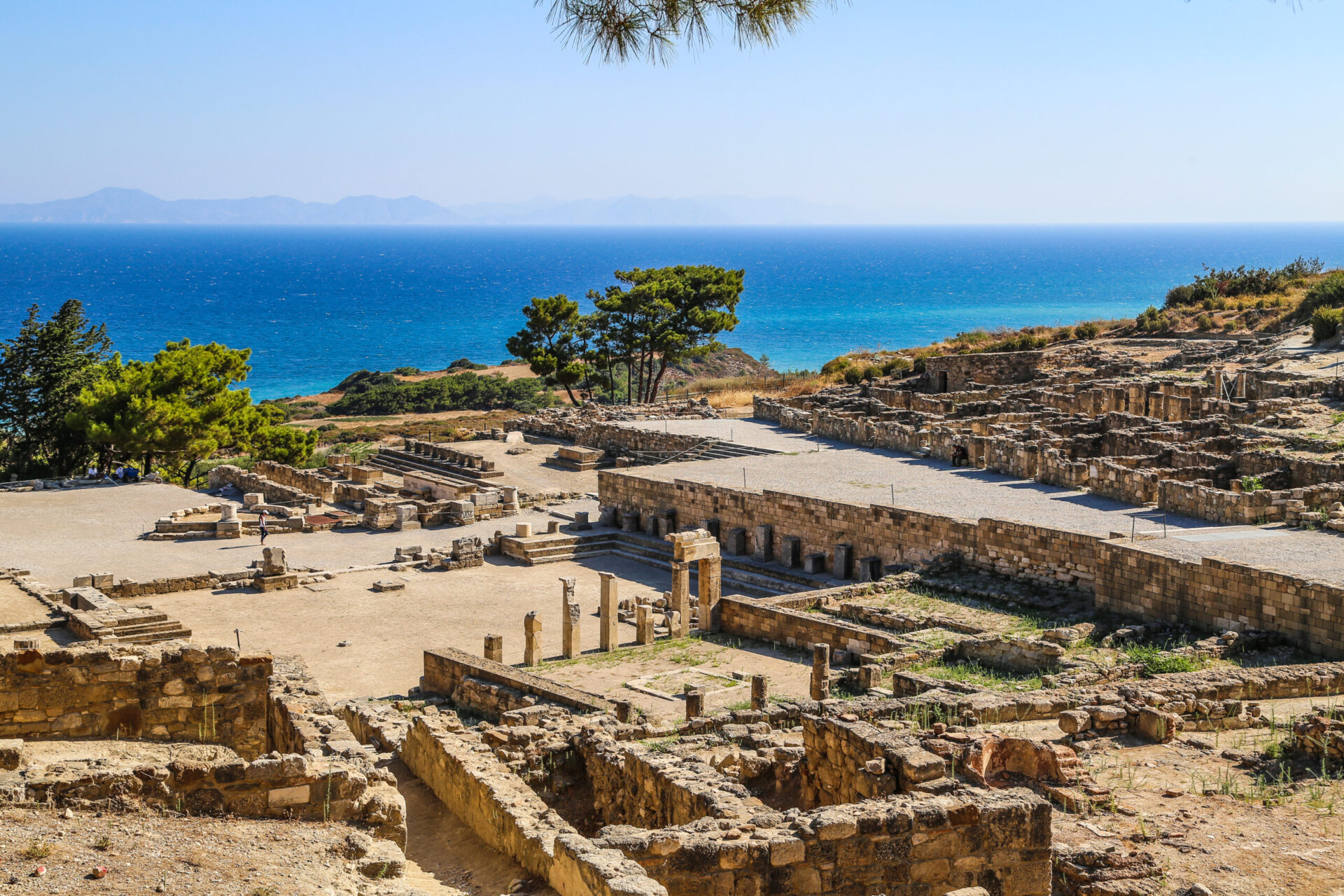
One of the most complete ancient sites in Rhodes Greece, Ancient Kamiros reveals the structure of an entire settlement rather than isolated ruins. Streets, homes, and water systems remain visible, offering insight into how daily life was organised. Often referred to as a “Pompeii of Greece,” Kamiros Rhodes allows visitors to move through the layout of an ancient city in a way that feels immediate and tangible.
Lindos Acropolis
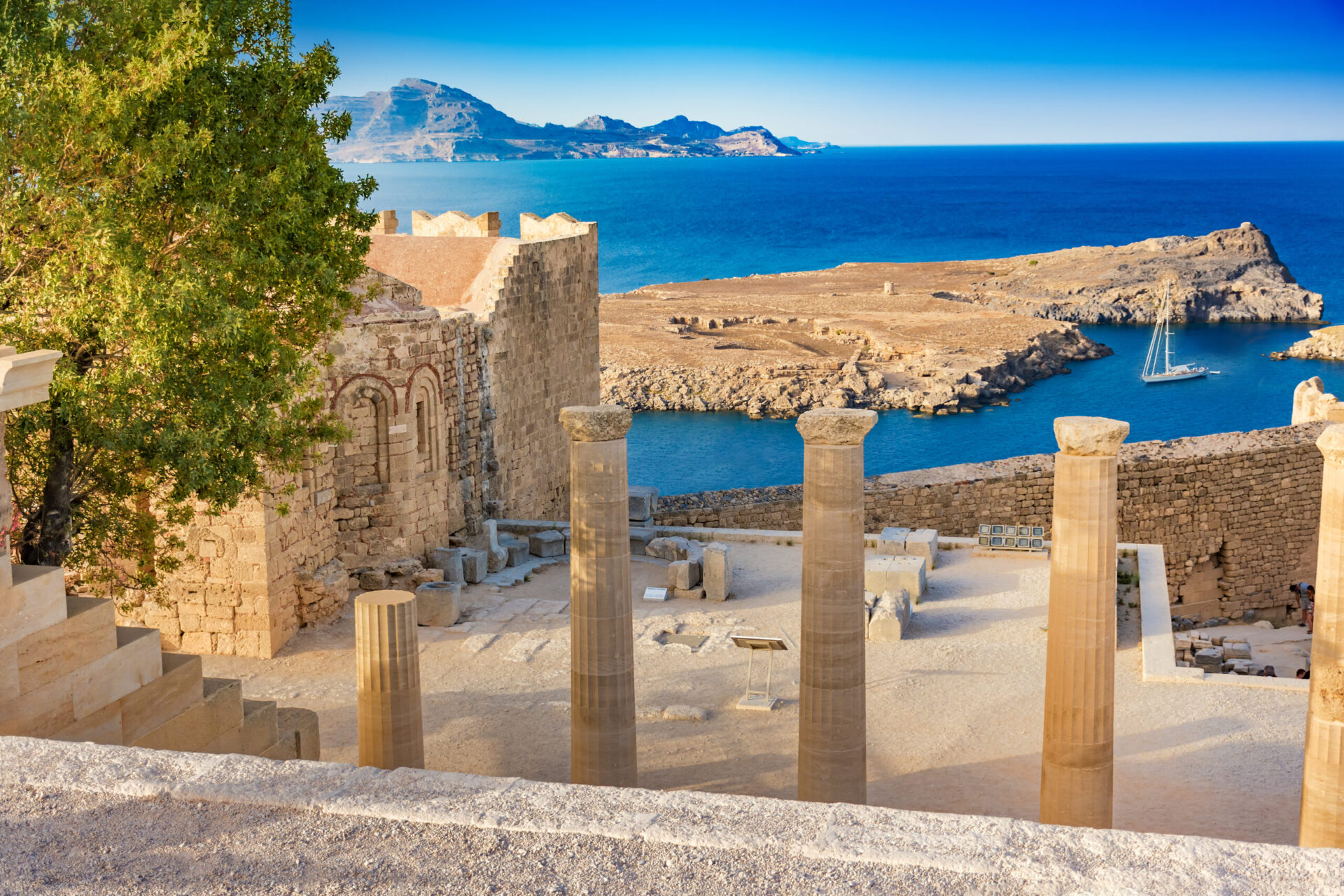
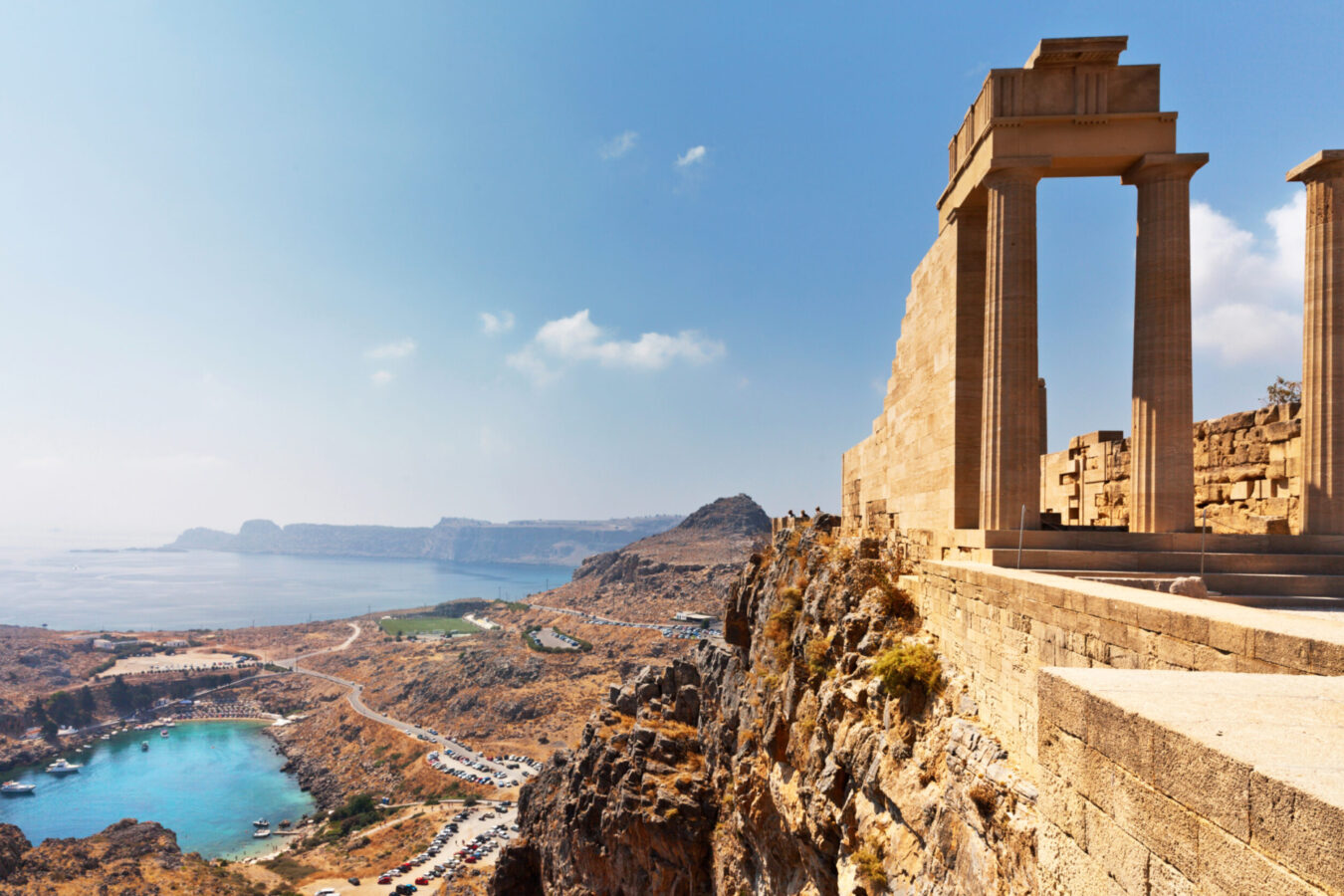
Rising above the village, the Lindos Acropolis is one of the most visually striking sites on the island. The path leading up to the acropolis forms part of the experience, gradually revealing the structure as the elevation increases. At the summit, the remains of the Temple of Athena offer a clear sense of scale, framed by uninterrupted views of the coastline, a setting that connects the ancient site to its natural surroundings.
The Colossus of Rhodes
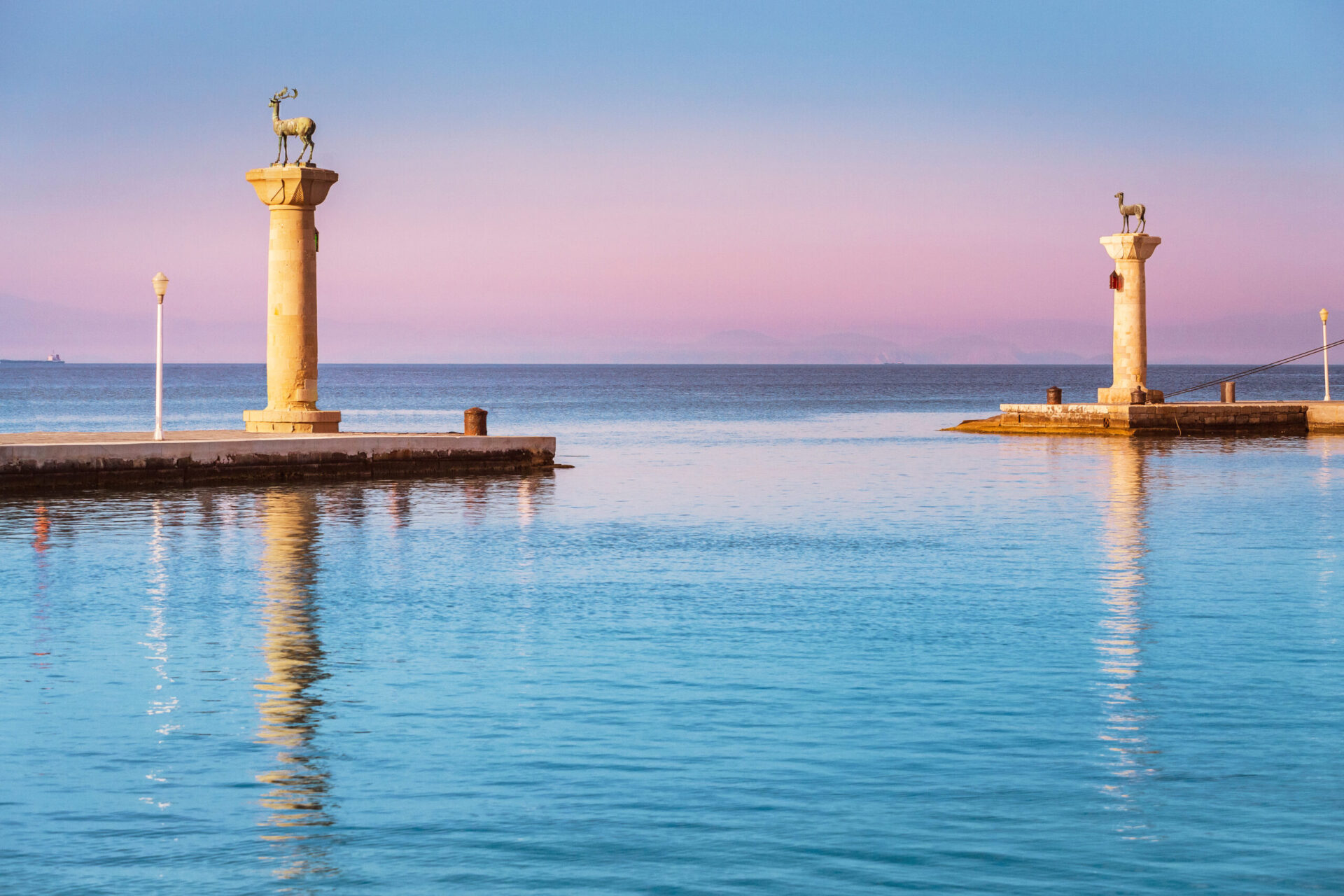
Unlike other entries, the Colossus of Rhodes is not a site that can be visited in its original form. Once standing near Mandraki Harbour, it was one of the Seven Wonders of the Ancient World. Today, its presence is symbolic rather than physical, yet it remains central to the island’s identity. Understanding its story, often explored through Rhodes mythology, adds a different dimension to the island’s historical narrative.
Where Ancient Rhodes Meets the Medieval City
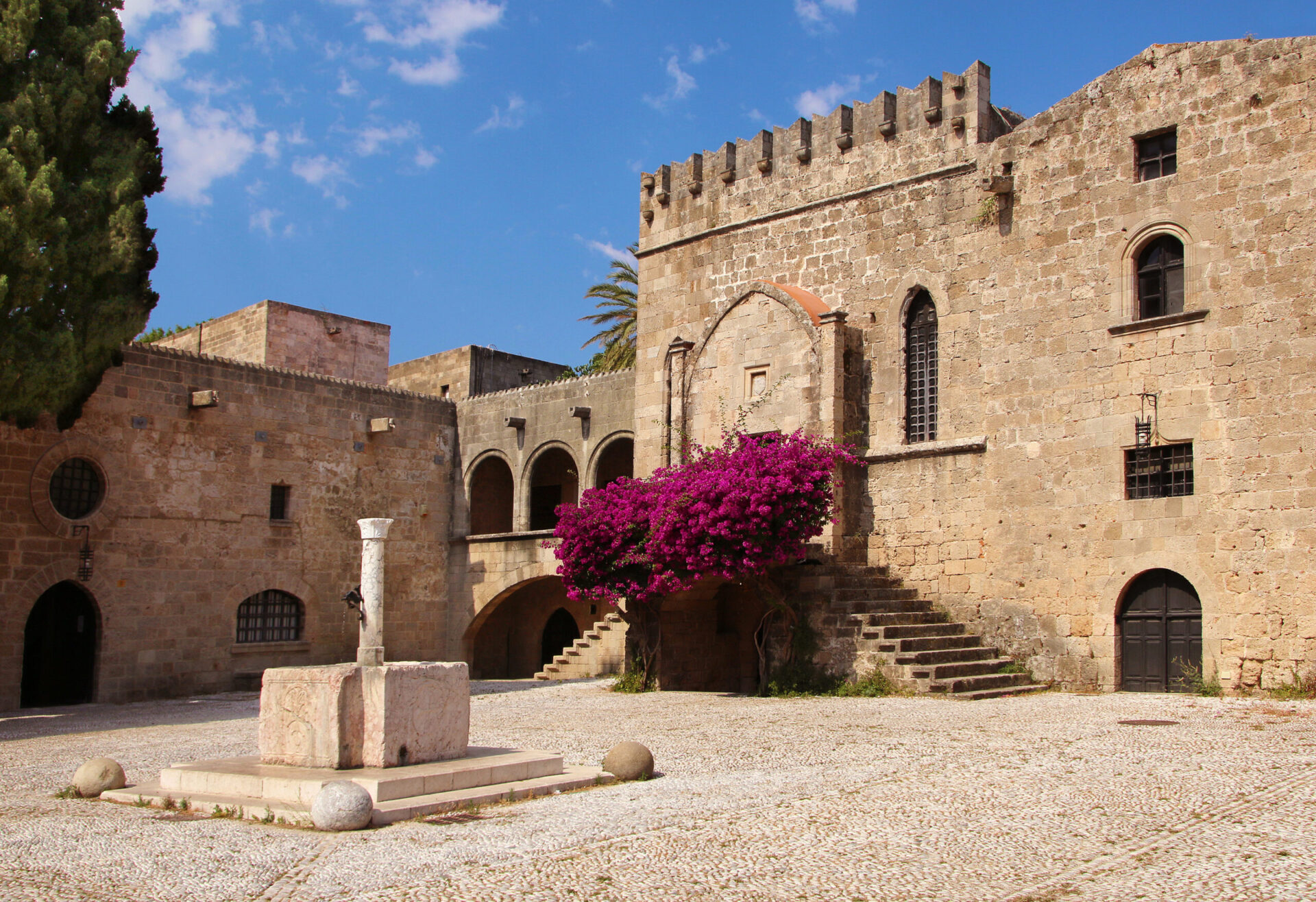
The transition from ancient to later periods is most clearly experienced within the Medieval City of Rhodes. Here, layers of history are not separated but integrated, with ancient foundations supporting later structures. Walking through its streets offers a sense of continuity, where each period has left a visible imprint without fully replacing what came before.
This coexistence defines the character of Rhodes, allowing visitors to experience multiple eras within a single setting rather than across separate locations.
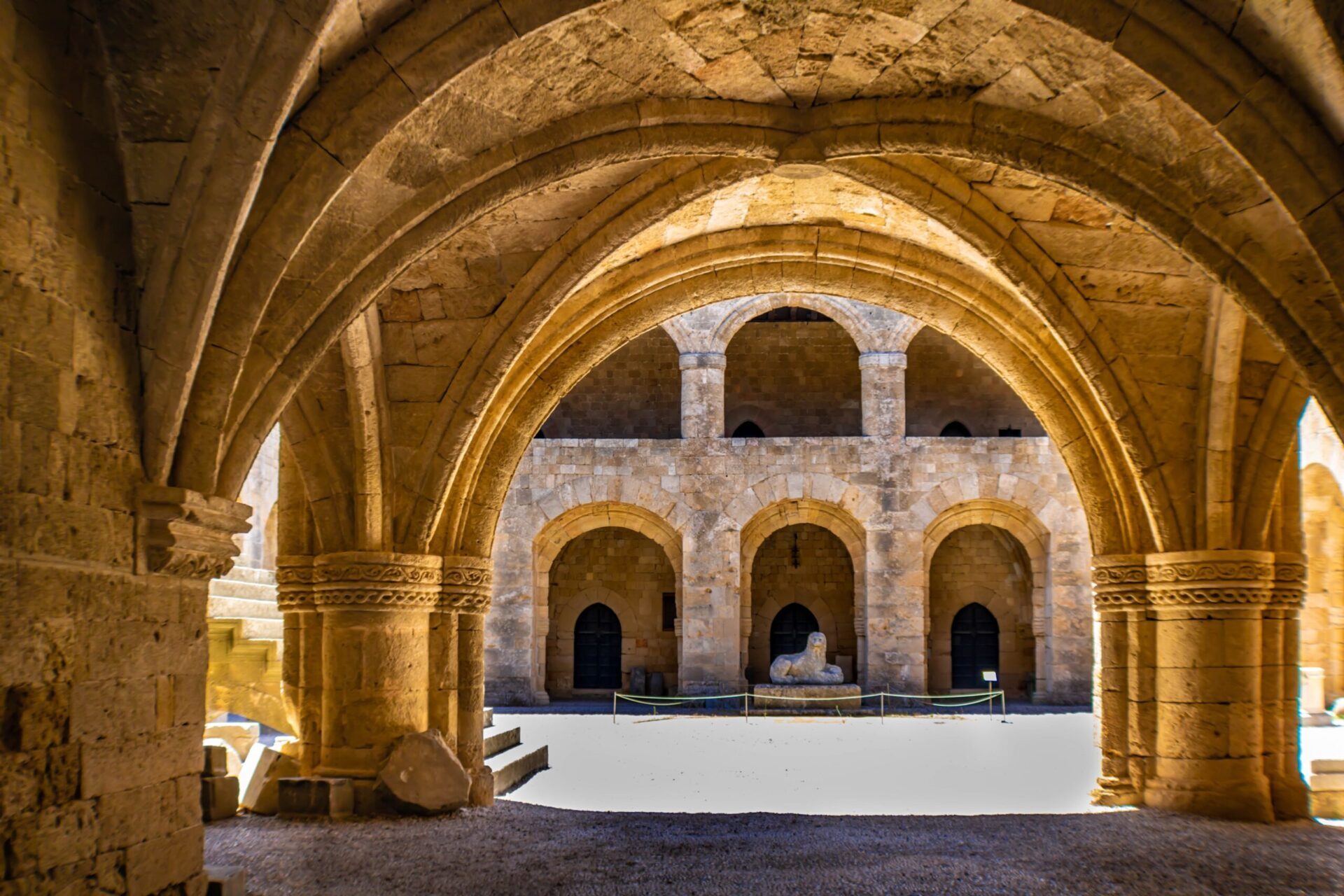
Rhodes Archaeological Museum
Located within a medieval building, the Rhodes archaeological museum bridges the gap between the island’s ancient sites and their historical context. Artefacts recovered from across Rhodes are displayed in a way that adds depth to the ruins seen elsewhere, making it an essential part of understanding the island’s past. It also forms part of the wider network of must-visit museums in Rhodes that enrich the overall experience.
Experiencing Ancient Sites in Rhodes Today
Visiting the ancient Greek archaeological sites in Rhodes is not only about understanding history, but about how these places are experienced in the present. Early morning visits often reveal a quieter atmosphere, where light and temperature create a more comfortable setting for exploration. Later in the day, the same sites take on a different character, shaped by movement, sound, and changing light.
Walking through these spaces at a measured pace allows details to emerge gradually, from architectural fragments to the surrounding landscape, reinforcing the connection between site and environment.
Planning Your Visit to Ancient Greek Archaeological Sites in Rhodes
Exploring ancient sites in Rhodes Greece requires a degree of planning, particularly when combining multiple locations. Sites such as Kamiros are best visited alongside nearby coastal areas, while those in Rhodes Town, including the museum and acropolis, can be explored within a single route.
Timing also plays a role. Visiting earlier in the day helps avoid both heat and crowds, allowing for a more considered experience. With thoughtful planning, it is possible to move between different sites while maintaining a steady and enjoyable pace.
For those who prefer a seamless exploration experience, guided visits or transfers to these sites can be arranged through the Concierge of H Hotels Collection.
Discovering Rhodes Through Its Past
The value of these ancient Greek archaeological sites in Rhodes lies not only in their historical importance, but in how they shape the present-day experience of the island. Each site contributes to a broader understanding of Rhodes, where history is not isolated but woven into everyday surroundings.
In this way, exploring these locations becomes more than a series of visits. It becomes a way of seeing the island differently, through the continuity of its past and the presence it still holds today.
FAQs
What are the most important ancient sites in Rhodes?
Key sites include the Acropolis of Rhodes, Ancient Kamiros, Lindos Acropolis, and the Rhodes Archaeological Museum, each offering a different perspective on the island’s history.
Can you visit the Colossus of Rhodes?
The Colossus of Rhodes no longer exists physically, but its historical location near Mandraki Harbour can still be visited, with its story remaining an important part of the island’s identity.
How many days do you need to explore ancient sites in Rhodes?
Two to three days allow enough time to explore the main archaeological sites at a comfortable pace, especially when combining inland and coastal locations.
Are Rhodes archaeological sites close to each other?
Some are clustered, particularly in Rhodes Town, while others such as Kamiros and Lindos require travel across the island. Planning routes in advance helps make the experience more efficient.