A Visit to Alimia Island
The Abandoned Isle Between Rhodes and Halki
Discover Alimia Island, an uninhabited Dodecanese islet where deserted houses, ancient maritime remains, and wartime traces survive between Rhodes and Halki.
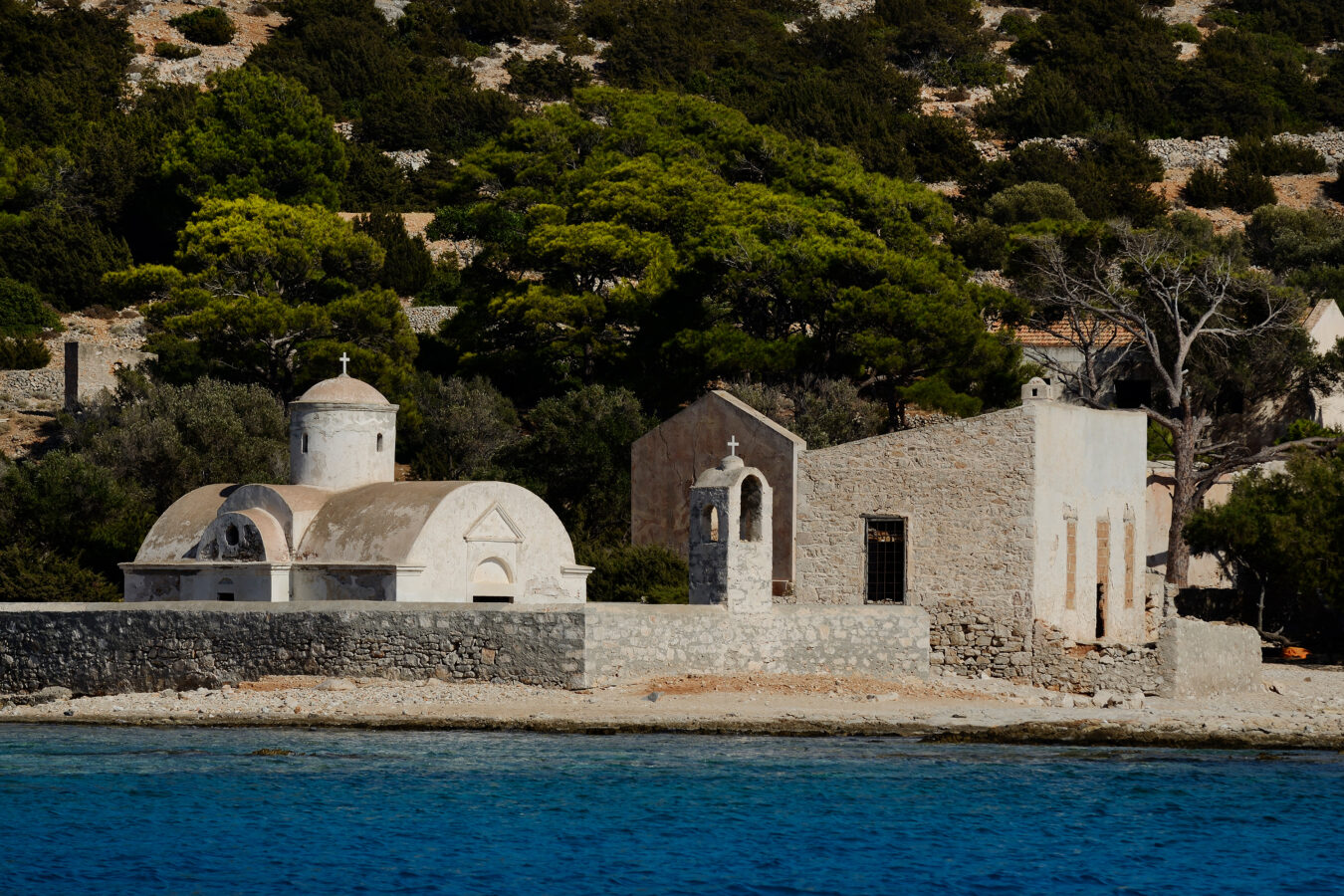
Approaching Alimia by sea, the first impression is one of remarkable quiet. A whitewashed chapel sits close to the water, bare hills rise behind sheltered bays, and the stone buildings of a former settlement appear almost unexpectedly along the shore. Yet Alimia Island was not always this still. Its position between Rhodes and Halki made it useful to sailors, soldiers, and island communities for centuries, leaving behind a landscape where ancient dockyards, medieval fortifications, and twentieth-century military remains can still be explored today.
Alimia Island: History and Solitude Between Rhodes and Halki
Alimia’s two naturally sheltered bays, Agios Georgios and Emporios, help explain why this small island attracted human activity for so long. Ancient rock-cut dockyards provide evidence of maritime use during the Hellenistic period, when Alimia belonged to the wider Rhodian sphere.
What makes a visit particularly interesting is how little separates one period from another. Rather than entering an archaeological site with clearly defined boundaries, you encounter different chapters of the island’s history as you move through the landscape.
Reading Alimia’s History Through the Landscape
Near the coast, the Hellenistic dockyards were cut directly into the rock so vessels could be drawn from the water. Around Emporios Bay, Roman period tombs and the foundations of an Early Christian basilica reveal that Alimia continued to be used long after the Hellenistic era.
Look uphill and another period comes into view. Medieval fortifications associated with the Knights Hospitaller occupy an earlier defensive site, taking advantage of the same high ground that had made the location strategically valuable centuries before.
Reaching the ruins requires more effort than the short distance might suggest. The route climbs over loose stone and uneven terrain, so sturdy footwear is useful and the ascent is best avoided during the hottest part of a summer afternoon.
The story continues across Rhodes itself, where our guide to the rural castles of Rhodes explores how similar defensive positions once watched over the island’s coastline.
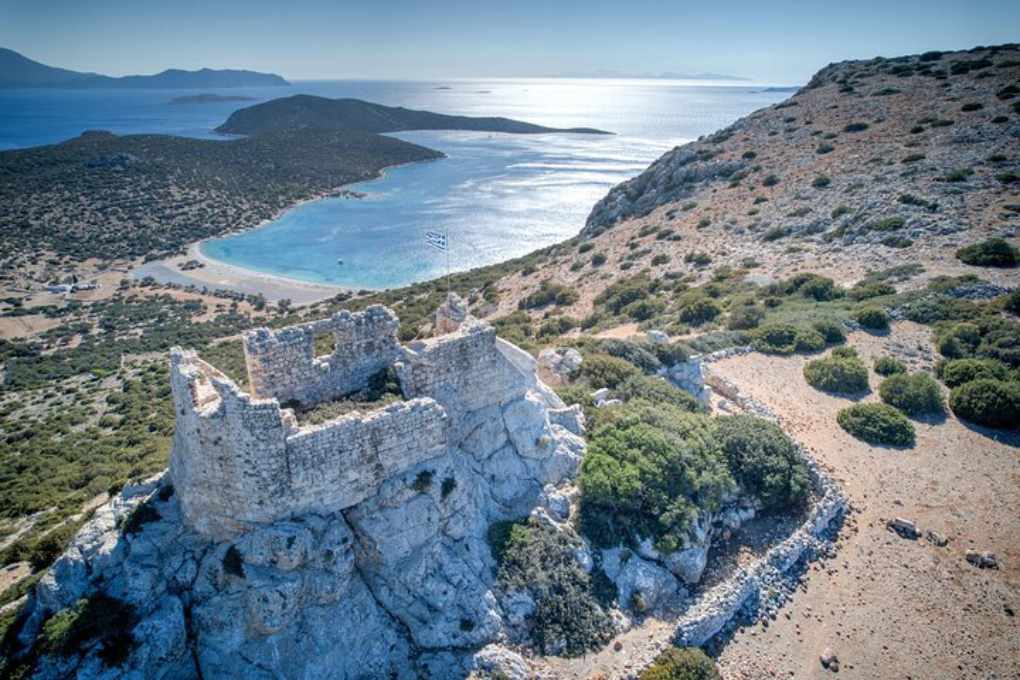 Photo source: Tripadvisor.com
An Abandoned Village with a Living Connection
Back beside the harbour, Alimia’s history becomes more personal.
Families once lived permanently on the island, making their livelihoods from fishing, farming and livestock. Permanent settlement gradually disappeared around the middle decades of the twentieth century, a period shaped by wartime disruption as well as the changing realities of life on such a small and isolated island.
World War II left particularly visible traces. Alimia served as a naval position during the Italian occupation of the Dodecanese before German forces took control following the Italian surrender in 1943. Former military buildings remain around the harbour, some still bearing wartime drawings and inscriptions left on their walls.
Walk among the empty houses today and two small churches provide a very different connection with the people who once lived here. Agios Georgios remains maintained within the former settlement, and its feast is still celebrated in April, bringing life back to an island without permanent residents.
Closer to the water stands Agios Minas, the small whitewashed church seen almost immediately from the bay. Against the surrounding stone, dry hills and blue water, its simplicity has become one of Alimia’s most recognisable sights.
Nature Reclaiming the Landscape
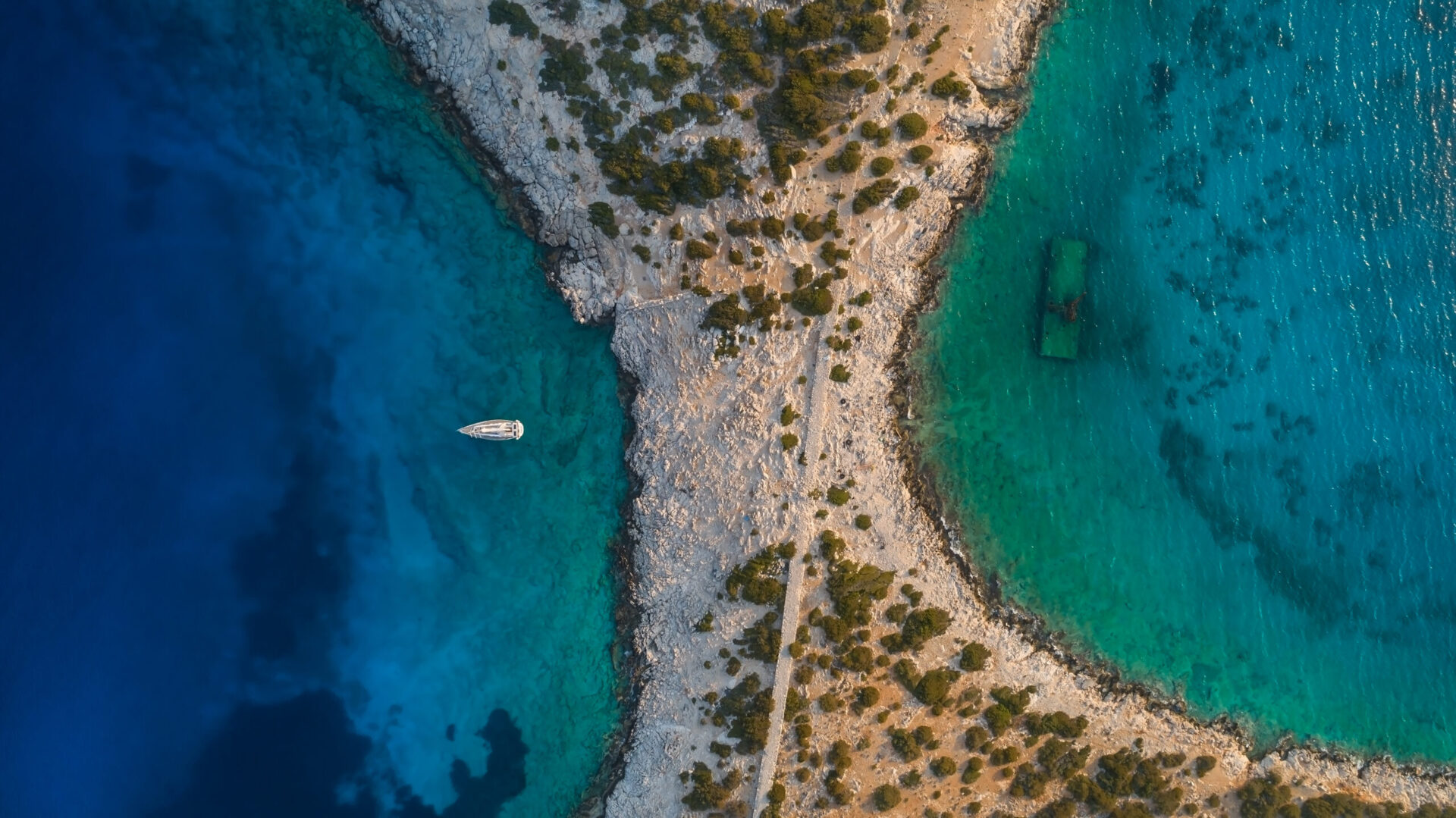
Decades without permanent settlement have also changed the relationship between the built and natural landscape.
Alimia forms part of Natura 2000 site GR4210026, which encompasses Halki, surrounding islets and marine areas. Coastal scrub, rocky shores and small wetland environments form part of the protected landscape, while a small saltwater wetland has been recorded near the abandoned settlement.
The result is not wilderness in the conventional sense. Houses, churches and military remains are still plainly visible. Instead, human history and nature increasingly occupy the same space, one of the qualities that makes Alimia so different from an ordinary island excursion.
For more on the ecosystems found across the region, our guide to Rhodes nature explores the landscapes and habitats of the larger island.
What Visiting Alimia Is Actually Like
There are no shops, tavernas or conventional visitor facilities waiting when you step ashore. Bring drinking water, food, sun protection and suitable shoes, particularly if you intend to explore beyond the harbour.
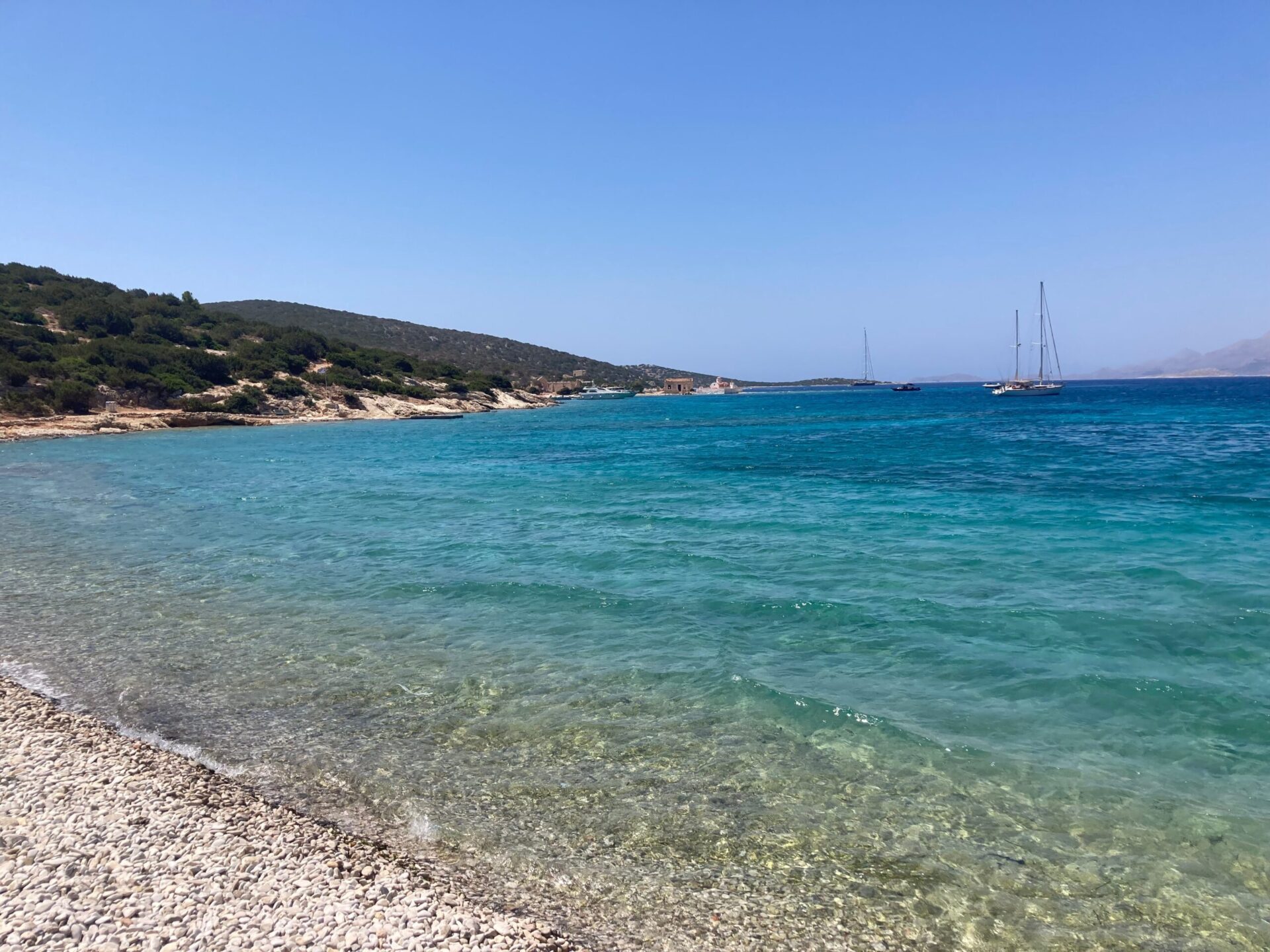
Much of the pleasure, however, comes from the simplicity of the visit. Swim in the sheltered bay, walk through the former settlement, find the churches and military remains, or climb towards the fortifications for a wider view across the surrounding sea.
There is limited shade once you move away from the buildings and trees around the settlement, making morning visits particularly appealing during summertime. The abandoned structures are not maintained attractions, so they should also be explored cautiously.
How to Reach Alimia Island
Alimia has no regular ferry service. Visits are generally made by private boat or seasonal excursion, most commonly from neighbouring Halki, with boat trips also available from Rhodes during the visitor season.
One very interesting way to explore Alimia island is on a Marine Life Excursion Cruise via the H Hotels Collection Concierge. Guests can learn about the local marine ecosystem, spot dolphins and tuna in open waters, and enjoy a memorable day trip out to the remote shores of Alimia.
This geography explains why you may see the island described as both Alimia Rhodes and Alimia Halki when researching a visit. Halki is its closest inhabited neighbour, while Rhodes provides another natural starting point for travellers exploring this part of the Dodecanese.
And the crossing is worth paying attention to. Wild dolphins are sometimes spotted in the waters around Rhodes, Halki and the surrounding islets. Sightings are never guaranteed, but keeping watch from the deck can add an unexpected wildlife encounter to the journey.
If travelling across Rhodes before joining a boat, Alimia can fit naturally into a wider Rhodes road trip, while our guide to Rhodes boat trips offers more ideas for experiencing this part of the world from the water.
Boat schedules and departure points vary seasonally and according to weather, so confirm current arrangements directly with your chosen operator.
Why Alimia Island Is Worth the Crossing
Perhaps the most surprising thing about Alimia is how much history occupies such a small and quiet island.
You can swim in a sheltered bay and, within the same visit, walk past Hellenistic maritime remains, climb towards medieval fortifications, enter a village where nobody permanently lives anymore and find wartime inscriptions still marking its walls.
For travellers researching Alimia, Greece that is the real reason to come. Not because the island is “secret” or untouched, but because it allows you to experience the Dodecanese differently, by stepping ashore somewhere that has played many roles over the centuries and is now being left largely to the sea, weather, and passage of time.