
Greek Stories from Rhodes
Fact, Myths, and Legends
Beyond its beaches and medieval walls, Rhodes is an island shaped by stories, where mythology, history, and legend continue to influence how the landscape is experienced today.
Some places preserve history through monuments. Others preserve it through stories. In Rhodes, the two often become inseparable. Myths remain tied to hills, harbours, and coastlines, while later legends continue to echo through medieval streets and maritime traditions. Exploring these Greek stories from Rhodes reveals an island where fact and imagination have long existed side by side, shaping not only the identity of Rhodes, but the way visitors continue to experience it centuries later.
Greek Stories from Rhodes That Still Shape the Island
Rhodes has always occupied a unique position within the Aegean. Its location between east and west made it a crossroads of trade, conquest, and cultural exchange for centuries. Over time, this constant movement of people also carried stories across its shores, allowing mythology, historical memory, and local legend to blend into one another.
The result is an island where ancient gods, medieval knights, sailors, and rulers all remain part of the wider narrative attached to the landscape itself.
The Myth of Helios and the Birth of Rhodes
Among the most enduring myths of Rhodes is the story of Helios, the sun god closely associated with the island. According to mythology, Rhodes emerged from the sea as a gift to Helios, who chose it as his sacred island. He later united with the nymph Rhodos, from whom the island is believed to have taken its name.
This connection between Rhodes and sunlight became deeply embedded in the island’s identity. Even today, the brightness of the landscape, the openness of the coastline, and the island’s strong maritime character continue to reinforce its long-standing symbolic connection with light and the sea.
For a broader overview of the island’s mythological foundations, exploring Rhodes mythology reveals how these stories became central to the cultural identity of the island itself.
The Colossus of Rhodes Between History and Legend
No story connected to Rhodes is more famous than that of the Colossus. Built in honour of Helios after a military victory, the monumental bronze statue became one of the Seven Wonders of the Ancient World.
Yet the Colossus also represents the blurred line between fact and legend. Historians agree the monument existed, but many of the dramatic images associated with it today, particularly the idea that it stood straddling the harbour entrance, are likely later interpretations rather than historical reality.
This uncertainty is part of what keeps the story alive. The absence of complete certainty allows imagination to continue filling the gaps, transforming the Colossus from an archaeological subject into one of the defining Rhodes legends still associated with the island today.
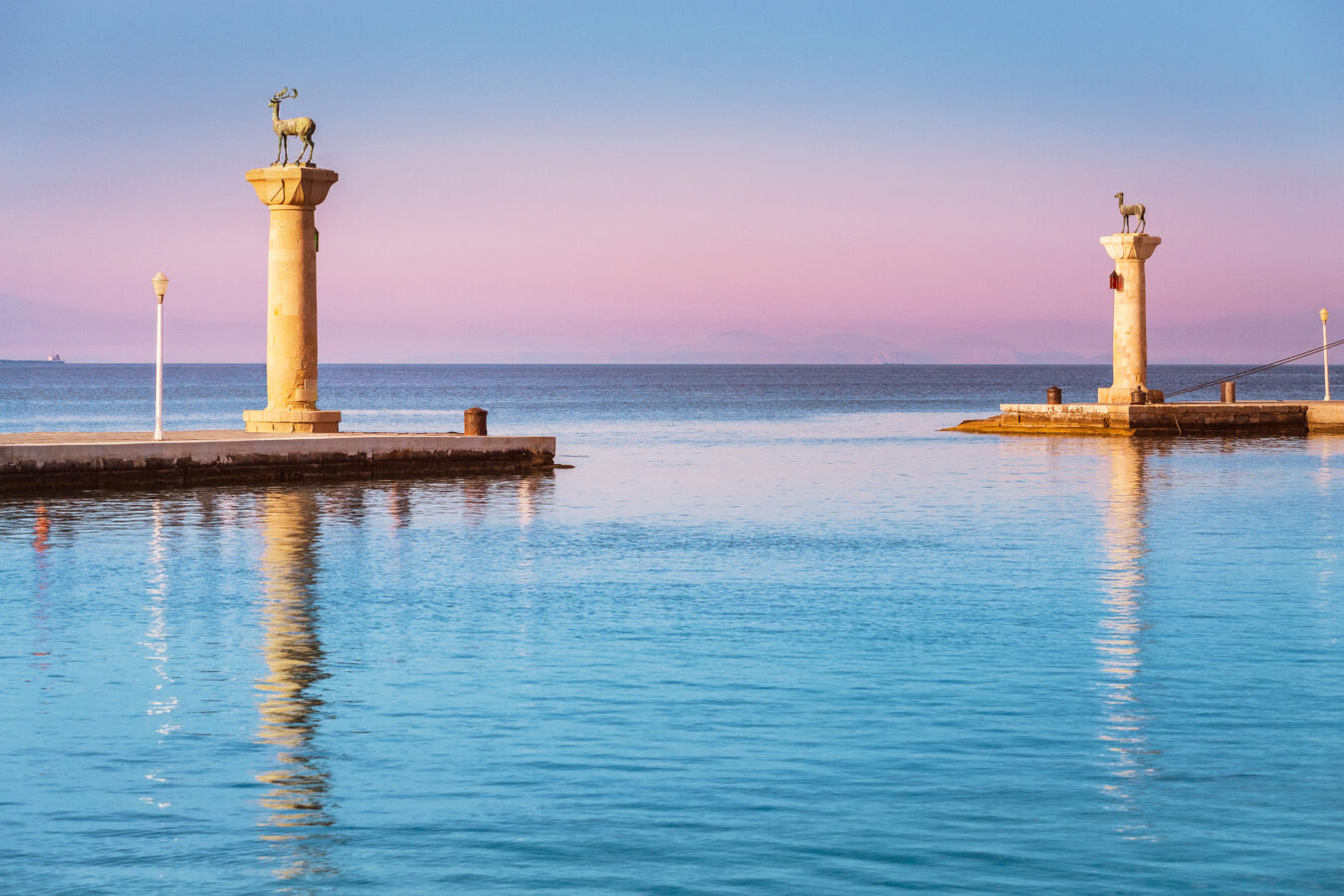
Walking through Mandraki Harbour today, it may be difficult to imagine how a gigantic statue may once have stood near the harbour entrance, where the Rhodian Deer statues now stand. Erected in 1947, the deer statues have gradually become symbolic markers connected to the memory of the Colossus itself. The choice of deer was not by chance; the Dama Dama deer has been associated with Rhodes since antiquity, with the island once referred to as “Elafousa,” meaning “Island of the Deer.” Together, these enduring symbols reflect how mythology, history, and civic identity remain intertwined within the modern city today.
Places Where Stories Still Linger
Across Rhodes, mythology often feels inseparable from the physical landscape. Ancient acropolises, elevated hills, and ruined settlements create settings where stories feel naturally attached to place rather than confined to the past.
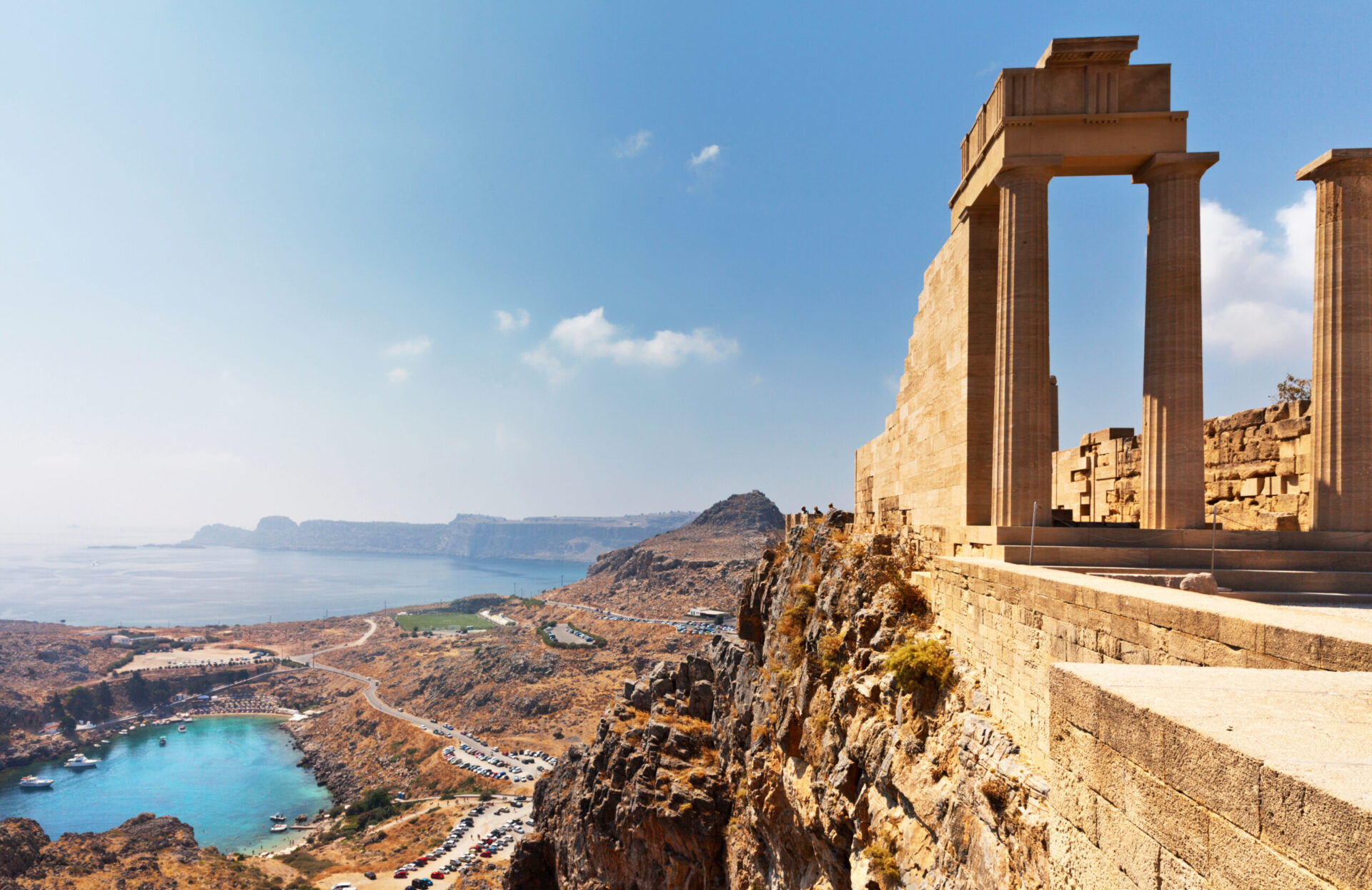
At Lindos Acropolis, the ascent itself gradually reveals the site above the sea, reinforcing why such locations became associated with gods, protection, and ritual significance. Meanwhile, Ancient Kamiros offers insight into how an entire settlement once functioned, making ancient life feel tangible rather than abstract.
Exploring the island’s ancient archaeological sites in Rhodes helps place many of these myths and legends within the wider historical framework of the island, connecting storytelling with the surviving remains that still shape the landscape today.
Stories Hidden Within the Landscape
Not all stories connected to Rhodes come directly from classical mythology. Over centuries, forests, valleys, springs, and isolated coastlines gradually accumulated local legends of their own.
Places such as the Valley of the Butterflies gained an almost symbolic atmosphere through their unusual natural setting, while isolated hills and cave-like formations across the island encouraged folklore shaped by travellers, shepherds, and sailors moving through remote areas.
As with many islands, the geography itself encouraged storytelling. Landscapes that felt isolated, dramatic, or difficult to access naturally became attached to mystery, superstition, and oral tradition long before modern tourism emerged.
Medieval Rhodes and the Legends That Followed
The storytelling identity of Rhodes did not end with antiquity. During the medieval era, the arrival of the Knights Hospitaller introduced another layer of legend to the island.
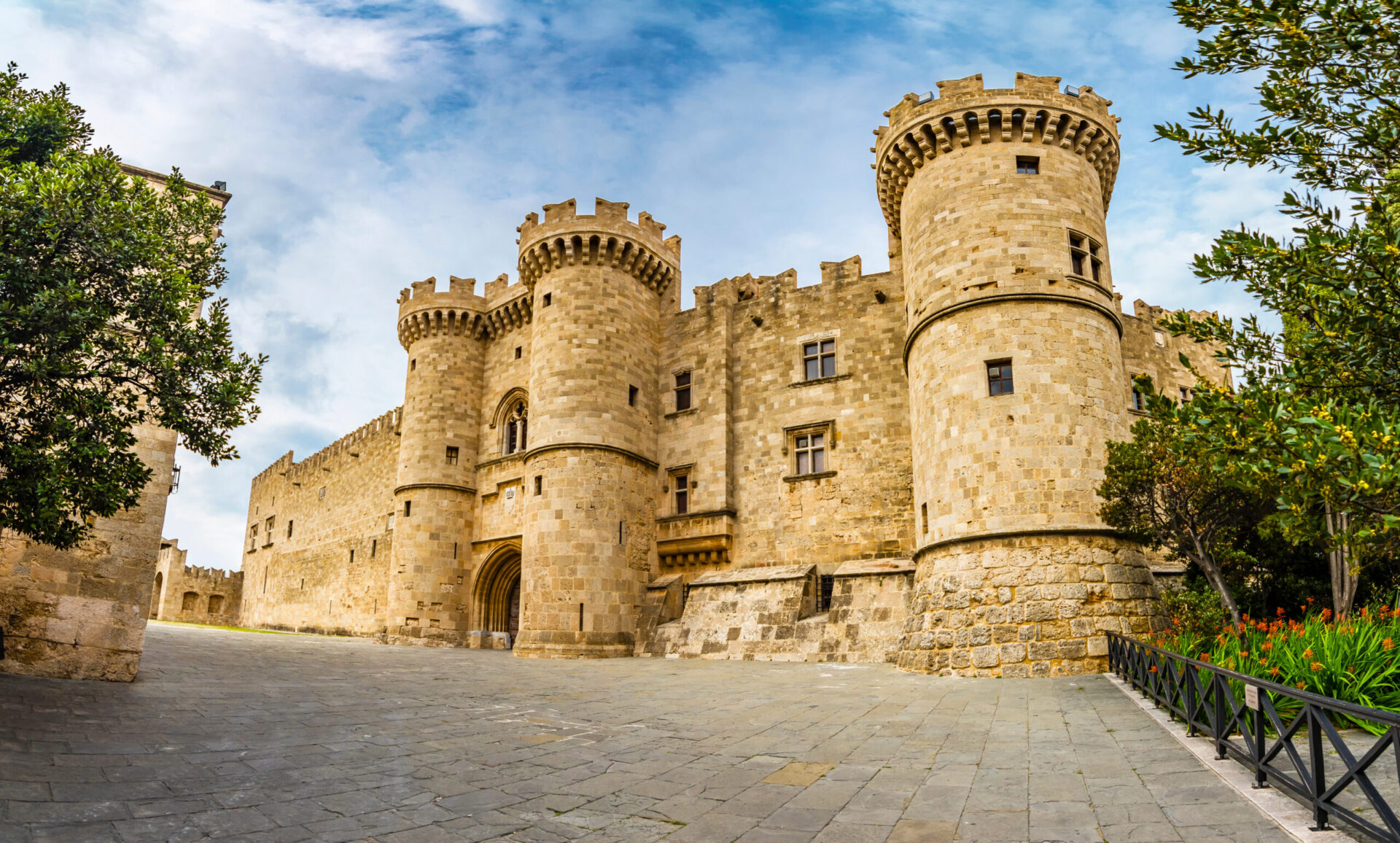
Within the Medieval City, narrow streets, fortified walls, and hidden passageways created an environment where stories of sieges, hidden chambers, and pirate attacks naturally evolved over time. The atmosphere of the Old Town still reflects this layered history, where Byzantine, Ottoman, Italian, and knightly influences coexist within the same urban space.
Beyond the walls, the evolution of the island continued into what is now Rhodes New Town, where Italian urban planning and waterfront architecture introduced another chapter in the island’s identity. Exploring Rhodes New Town reveals how even the modern side of the island remains closely connected to the historical and symbolic character that defines Rhodes as a whole.
Why These Stories Still Matter Today
The enduring power of these timeless Greek stories from Rhodes lies not simply in whether every detail is historically accurate, but in how deeply they remain connected to the identity of the island itself.
Stories influence how places are perceived long after the original events fade into uncertainty. They shape how visitors approach ancient ruins, how harbours are remembered, and how landscapes continue to feel meaningful beyond their visual beauty alone.
In Rhodes, mythology, historical memory, and legend continue to coexist naturally. The island is not experienced only through monuments or beaches, but through the stories that remain attached to them, allowing the past to feel present in ways that are both subtle and enduring.