Top Places to Visit in Athens
A Classic Guide Itinerary
A city like Athens is best experienced on the move, where daily walks reveal ancient landmarks, neighbourhood streets, and rooftop views that connect past and present.
For first-time visitors, Athens can appear overwhelming at first glance, layered with history, traffic, neighbourhoods, and landmarks spread across the city centre. Yet many of the top 10 places to visit in Athens unfold naturally within walking distance of one another, allowing the city to be experienced not as isolated attractions, but as part of a continuous route shaped by atmosphere and daily rhythm. Understanding these cultural experiences in Athens gives context behind places, helping visitors move beyond landmark-focused sightseeing and into the rhythms that shape the city day to day.
Top 10 Places to Visit in Athens for First-Time Visitors
The most rewarding way to explore Athens is to move gradually through the city rather than rushing between landmarks. Many of the essential sites are concentrated within the historic centre, allowing visitors to experience ancient monuments, local neighbourhoods, museums, and viewpoints within a practical and walkable flow.
1. The Acropolis and Parthenon
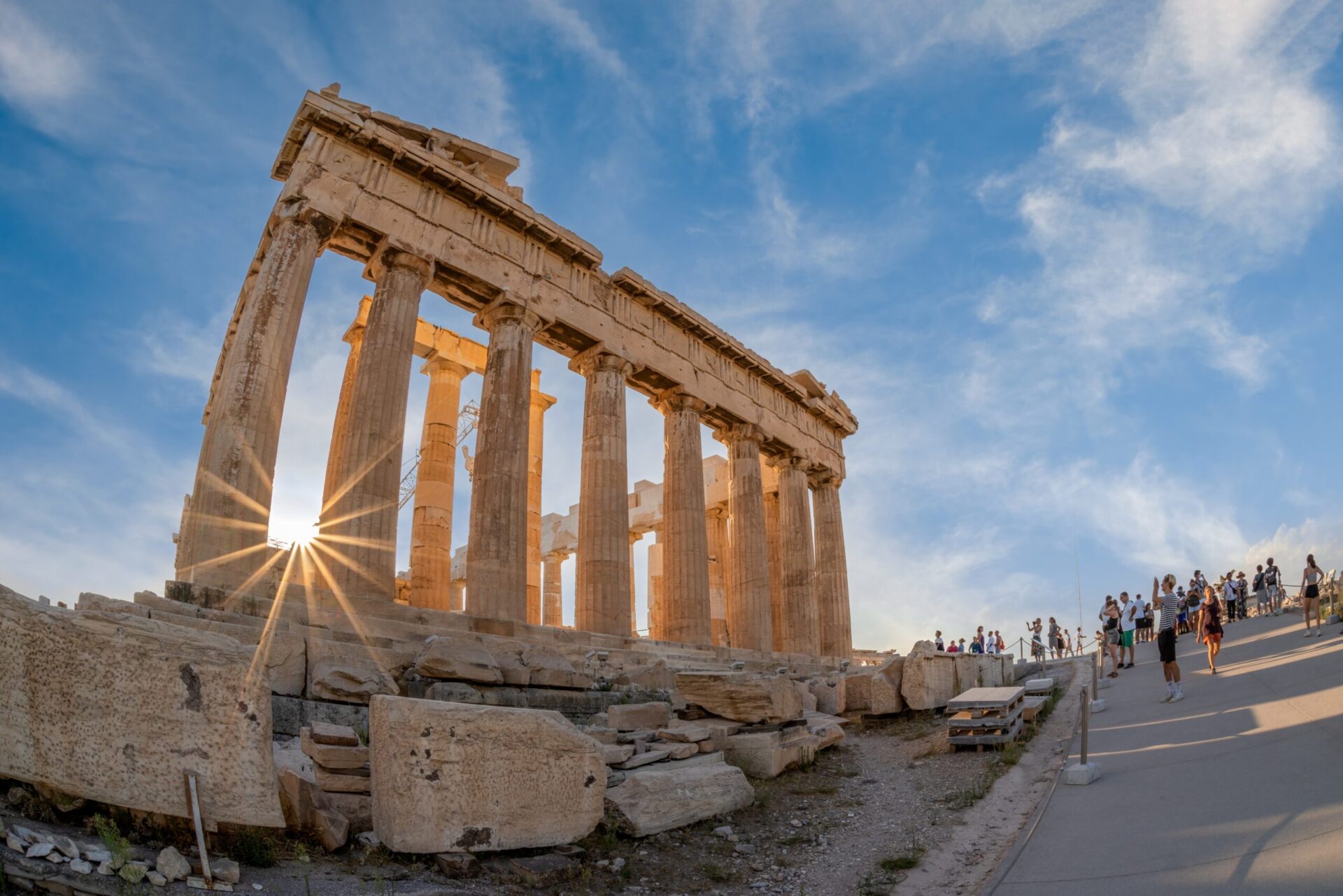
Any introduction to Athens naturally begins with the Acropolis. Rising above the city, it acts as a constant point of reference, appearing unexpectedly between streets and buildings as you move through different neighbourhoods.
Arriving early in the morning changes the experience entirely. Before the stronger heat and crowds settle in, the site feels quieter and easier to absorb at a slower pace. From here, the relationship between Athens past and present becomes immediately visible, with the modern city stretching outward beneath one of the world’s most recognisable ancient landmarks.
For those wanting deeper historical context before visiting, understanding the broader story of ancient Athens history adds greater meaning to the experience itself.
2. The Acropolis Museum
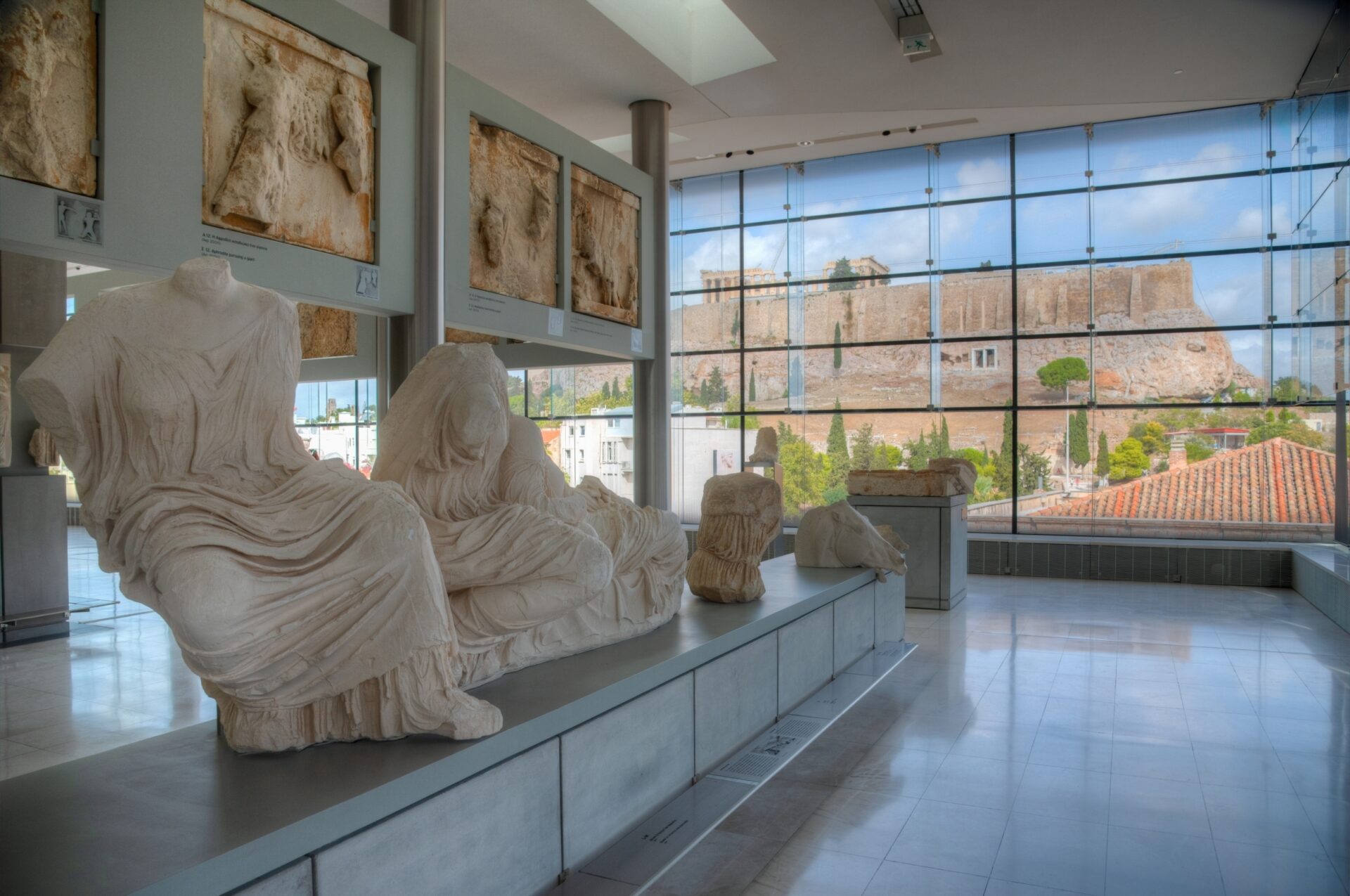
Descending from the Acropolis, the route naturally leads towards the Acropolis Museum. Rather than feeling separate from the archaeological site above, the museum helps complete the experience, placing sculpture, artefacts, and fragments into clearer historical perspective.
Its modern design also creates a contrast that reflects Athens itself, where ancient history continuously coexists with contemporary life.
3. Plaka and Anafiotika
From the museum area, movement into Plaka feels almost seamless. The neighbourhood introduces a different rhythm, where neoclassical buildings, small cafés, and pedestrian streets soften the intensity of the archaeological zones nearby.
Hidden within Plaka, Anafiotika reveals one of the most unexpectedly beautiful places in Athens. Its narrow whitewashed pathways and Cycladic character create the feeling of a small island village beneath the Acropolis itself.
This slower transition between monument and neighbourhood is part of what makes Athens feel layered rather than linear.
4. Monastiraki and the Ancient Agora
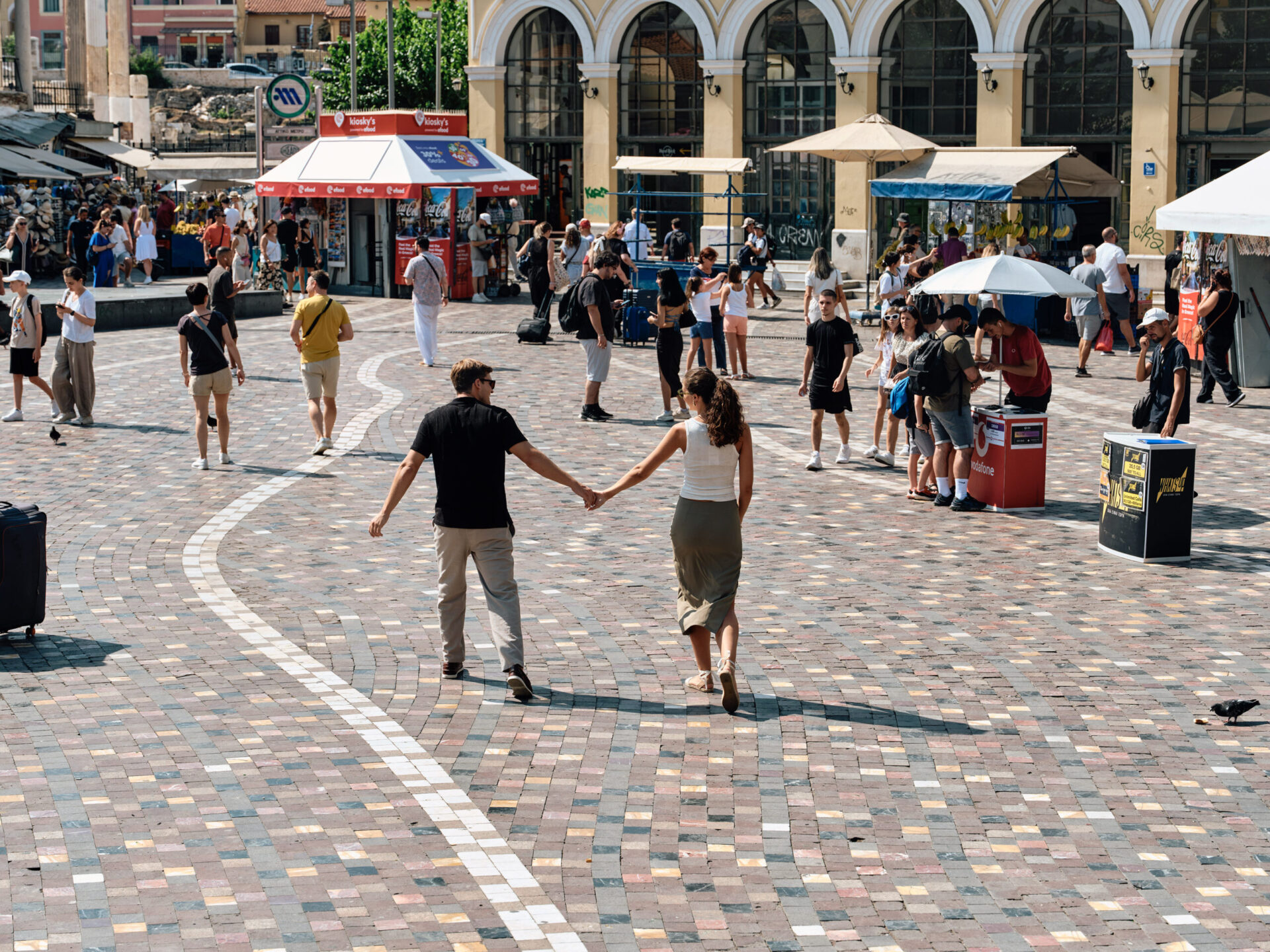
Continuing westward through the historic centre, Monastiraki introduces a livelier atmosphere shaped by markets, street movement, and open views towards the Acropolis.
Nearby, the Ancient Agora offers another essential historical layer. Less elevated than the Acropolis but equally important historically, it allows visitors to walk through a space once central to political and social life in ancient Athens.
Together, these areas form some of the most important places to visit in Athens city centre, particularly because they connect so naturally on foot.

5. Syntagma Square and the Changing of the Guard
Moving further through the centre eventually leads towards Syntagma Square, where modern Athens becomes more visible through government buildings, hotels, and wider avenues.
Outside the Hellenic Parliament, the Changing of the Guard introduces one of the most recognisable ceremonial moments in the city. The slow, deliberate movement of the Evzones creates a brief pause within the faster rhythm of the surrounding streets, and remains one of the most accessible places to visit in Athens for free.

6. The National Garden and Temple of Olympian Zeus
Directly beside the centre, the National Garden introduces shade and stillness that contrasts noticeably with the surrounding city streets. Crossing through the garden gradually leads towards the Temple of Olympian Zeus, where the scale of the remaining columns continues to impress despite the fragmented state of the site itself.
Experiencing these locations together creates a more balanced pacing within the day, combining denser historical areas with quieter moments in between.

7. Filopappou Hill
As the afternoon light begins to soften, Filopappou Hill becomes one of the most rewarding places to experience Athens from above. The pathways remain relatively natural, and the elevated position offers uninterrupted views across the Acropolis and the wider city.
Unlike more structured landmarks, the experience here feels open-ended. People gather gradually, often without fixed plans, simply allowing the city to unfold below them.
For many visitors, this becomes one of the most memorable and atmospheric places to visit in Athens for free.
8. Lycabettus Hill
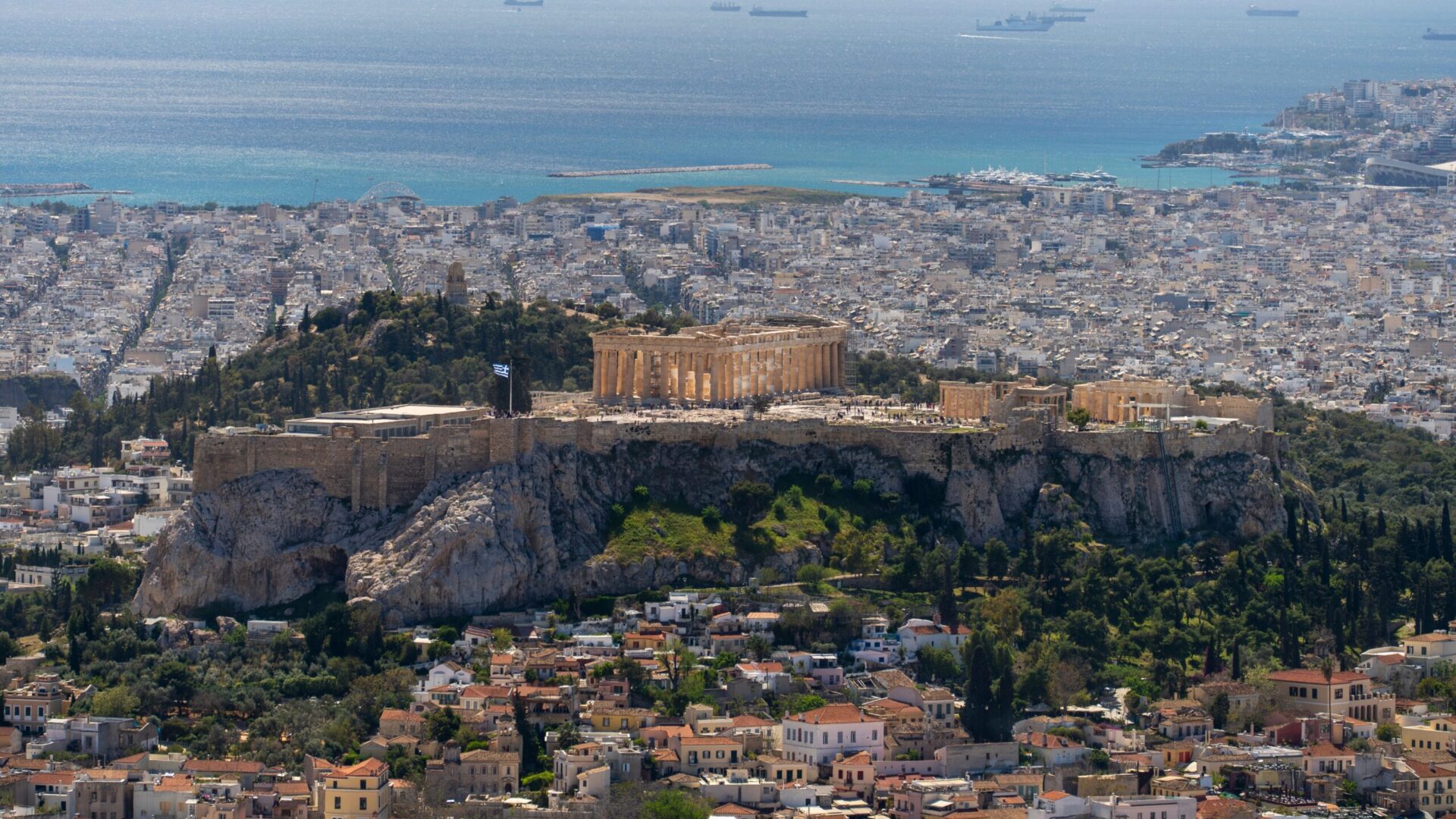
Where Filopappou feels grounded and natural, Lycabettus introduces a more dramatic panoramic perspective over Athens. Reaching the summit near sunset allows the city to transition gradually from daylight into evening, with the Acropolis illuminated in the distance once darkness settles.
The contrast between these two hills reveals how differently Athens can be experienced through elevation alone.
9. Places to Visit in Athens at Night
The atmosphere of Athens changes significantly after sunset. Streets that feel intense during the day become calmer, while illuminated monuments create a different relationship with the city itself.
Among the most rewarding places to visit in Athens at night are the pedestrian routes around the Acropolis, Plaka, and Psyrri, where movement continues late into the evening without feeling rushed. In Koukaki, the atmosphere becomes more laid back, shaped by smaller bars, local dining spots, and a slower neighbourhood rhythm. Gazi draws a younger crowd, particularly later in the evening, while Kolonaki offers a more refined side of Athens nightlife through wine bars, restaurants, and quieter late-night settings.
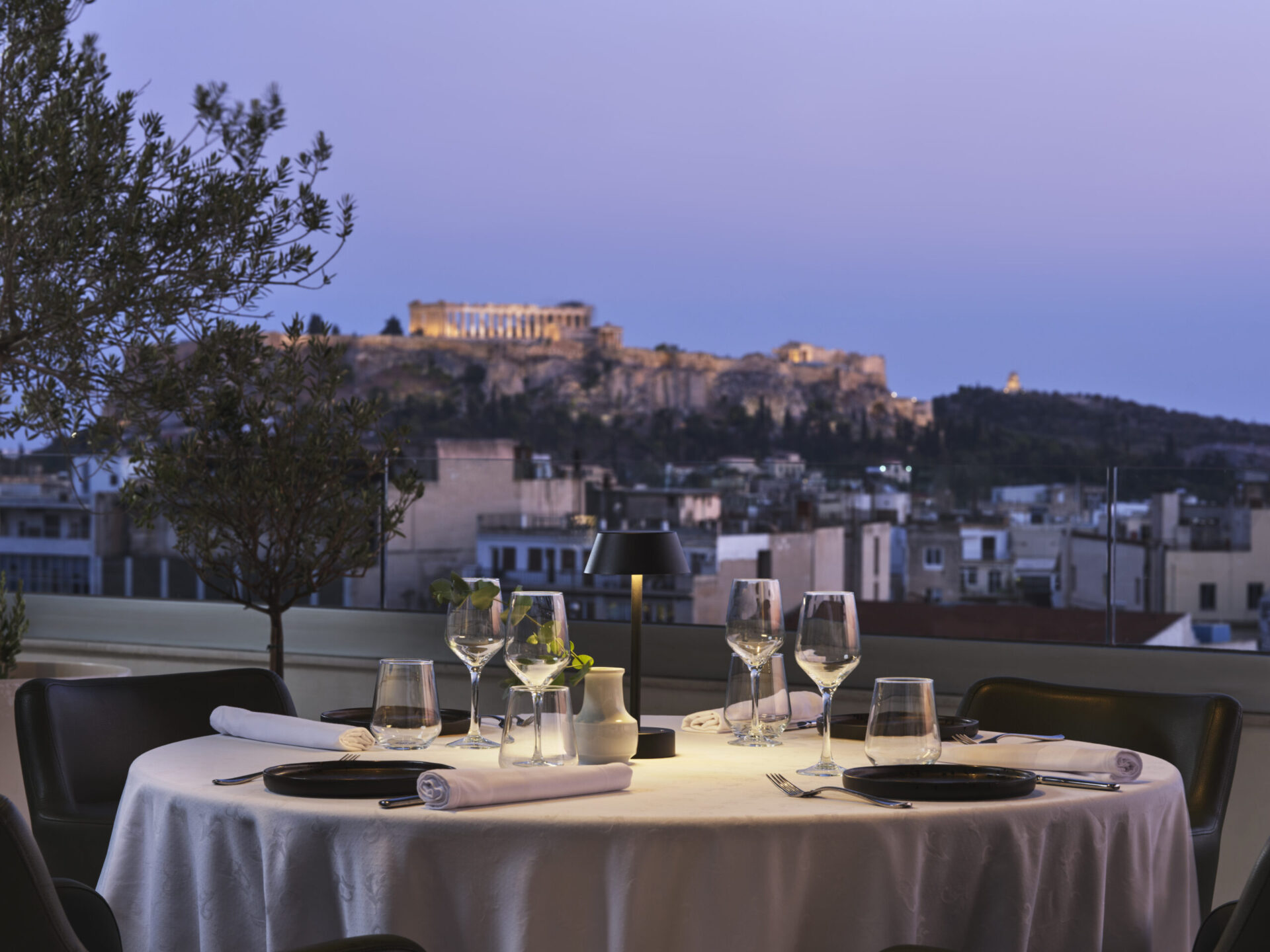
Rooftop dining by night also becomes part of the experience. Elevated views across the illuminated Acropolis allow visitors to experience the city from a quieter perspective above street level. At Olive Garden, atop Titania Hotel Athens, dinner unfolds against panoramic city views that become especially atmospheric as the light fades over the historic centre.
10. Places to Visit in Athens Beyond the Centre
For those exploring places to visit in Athens in 2 days, the experience expands naturally beyond the core historic centre. Additional time allows space for slower neighbourhood exploration, museum visits, or movement towards the coast itself.
This Athens Riviera guide offers a different perspective on the city, where coastline, sunset views, and seaside districts reveal another side of Athens beyond its archaeological identity.
Experiencing Athens at the Right Pace
The challenge of Athens is rarely deciding what to see, but understanding how to experience it without rushing. Many of the most rewarding moments happen between landmarks, while walking through neighbourhood streets, stopping unexpectedly at viewpoints, or allowing the pace of the city to guide the day naturally.
For visitors planning shorter stays, understanding how different areas connect can completely change the experience. A perfect short stay in Athens is less about trying to see everything and more about moving through the city in a way that feels balanced and immersive.
Whether staying briefly or extending your time across several days, Athens reveals itself most clearly when approached gradually, where history, movement, and everyday life remain constantly intertwined.