Was Rhodes Part of Italy?
Exploring the Island’s Italian Heritage
Beyond the ancient mythologies and Byzantine walls lies an early 20th-century chapter that dramatically redesigned the physical look and cultural landscape of the island.
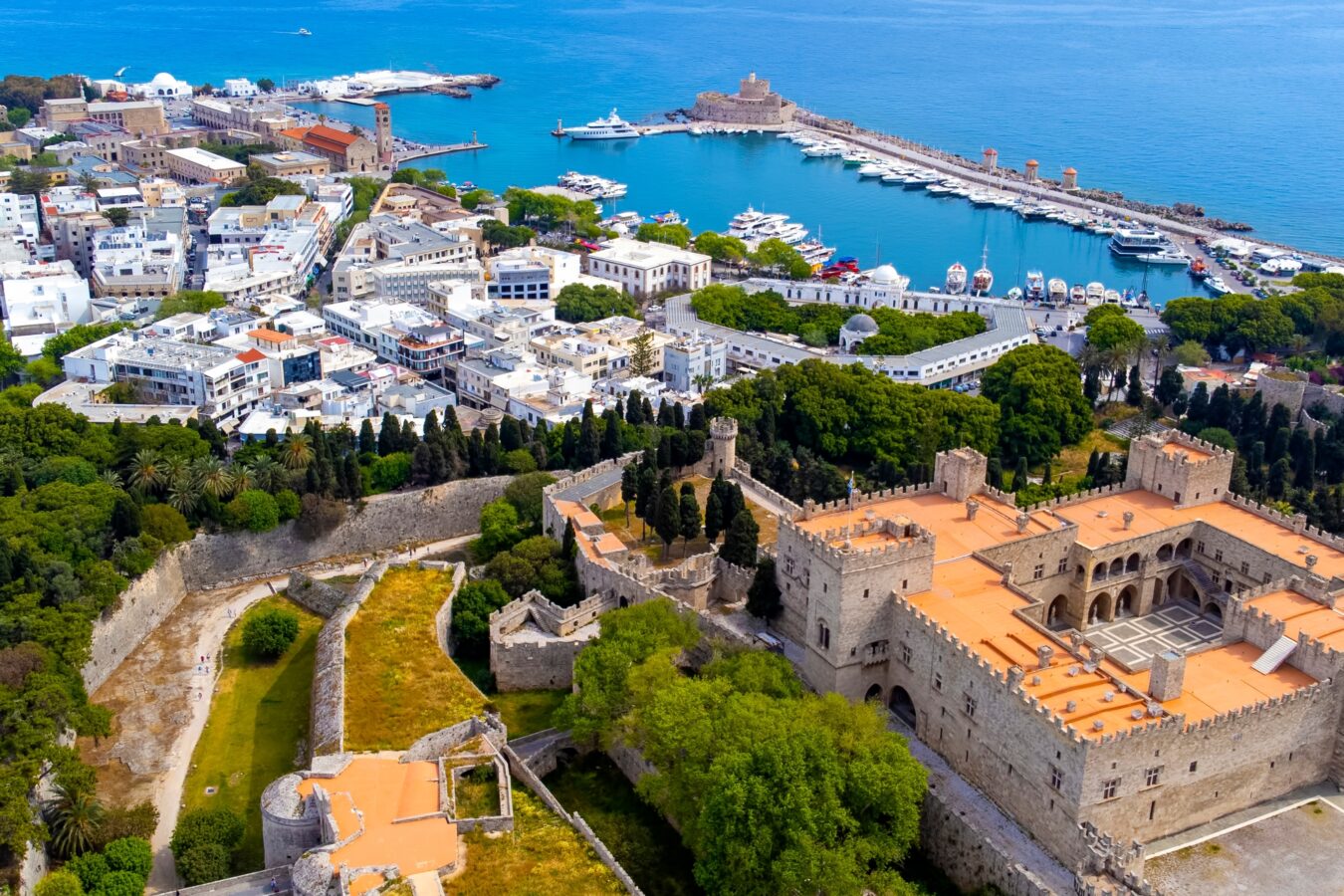
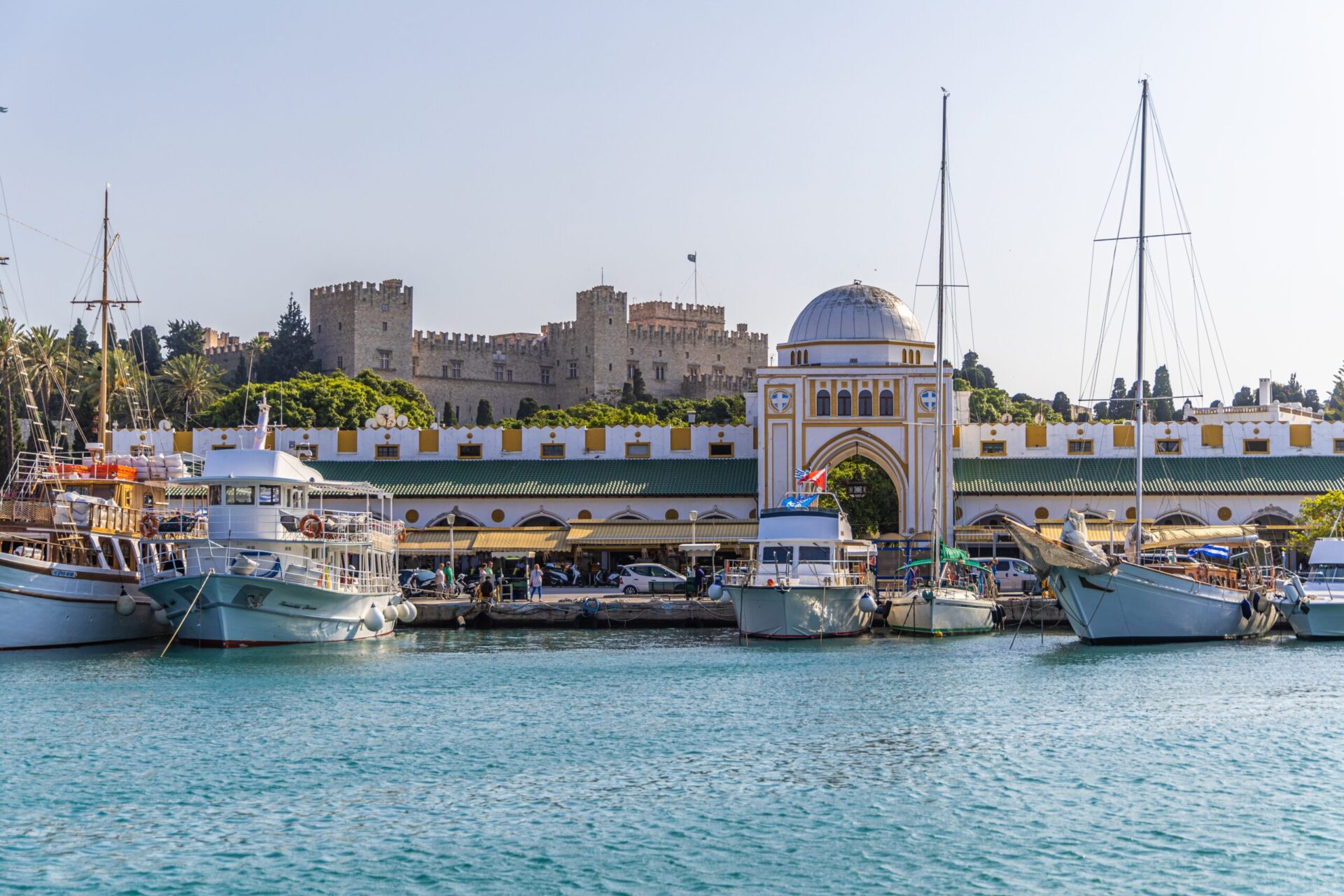
When stepping onto the sweeping promenade of Mandraki Harbour, visitors are often struck by an architectural language that feels distinctly detached from the classic whitewashed aesthetic of the Aegean. Monumental public buildings with clean geometric lines, grand stone arches, and imposing facades frame the waterfront, hinting at a recent geopolitical narrative that many travelers do not expect. The answer to whether Rhodes was part of Italy is written directly into the local stone. For over three decades, the island served as the administrative heart of the Italian Dodecanese, leaving behind a complex physical and cultural legacy that continues to shape how visitors experience the destination layout today.
Is Rhodes Italian or Greek? Resolving the Modern Identity
To answer the frequent question of whether “Is Rhodes Italian or Greek”, one must separate current political sovereignty from physical history. Culturally, linguistically, and spiritually, Rhodes has remained profoundly Greek throughout the centuries, a reality officially formalized in 1947 when the island group was reunited with the Greek mainland. However, the urban fabric tells a parallel story of administrative transformation. The built environment reflects a deliberate historical intersection where European imperial design was superimposed onto an ancient Mediterranean crossroads, creating a unique dual identity where modern Greek life unfolds inside an Italian architectural framework.
The Era of the Italian Occupation in Rhodes
The geopolitical landscape shifted dramatically in 1912 during the Italo-Turkish War, when Italian forces seized the Dodecanese islands from the declining Ottoman Empire. What began as a temporary wartime military deployment gradually solidified into a permanent geopolitical ambition. The Italian occupation of Rhodes underwent two distinct administrative phases that mirrored the political shifts in Rome.
Initially, under Governor Mario Lago in the 1920s, the administration adopted a diplomatic, eclectic approach known as the policy of respect, seeking to integrate various local communities by blending international design styles. However, by the 1930s, the appointment of Cesare Maria de Vecchi ushered in a much stricter, nationalist era. The administration tightened its grip on civic life, enforcing rigorous cultural alignment and launching an aggressive building program designed to project the authority of a new Roman empire across the eastern Mediterranean.
The Metamorphosis: Italian Architecture in Rhodes
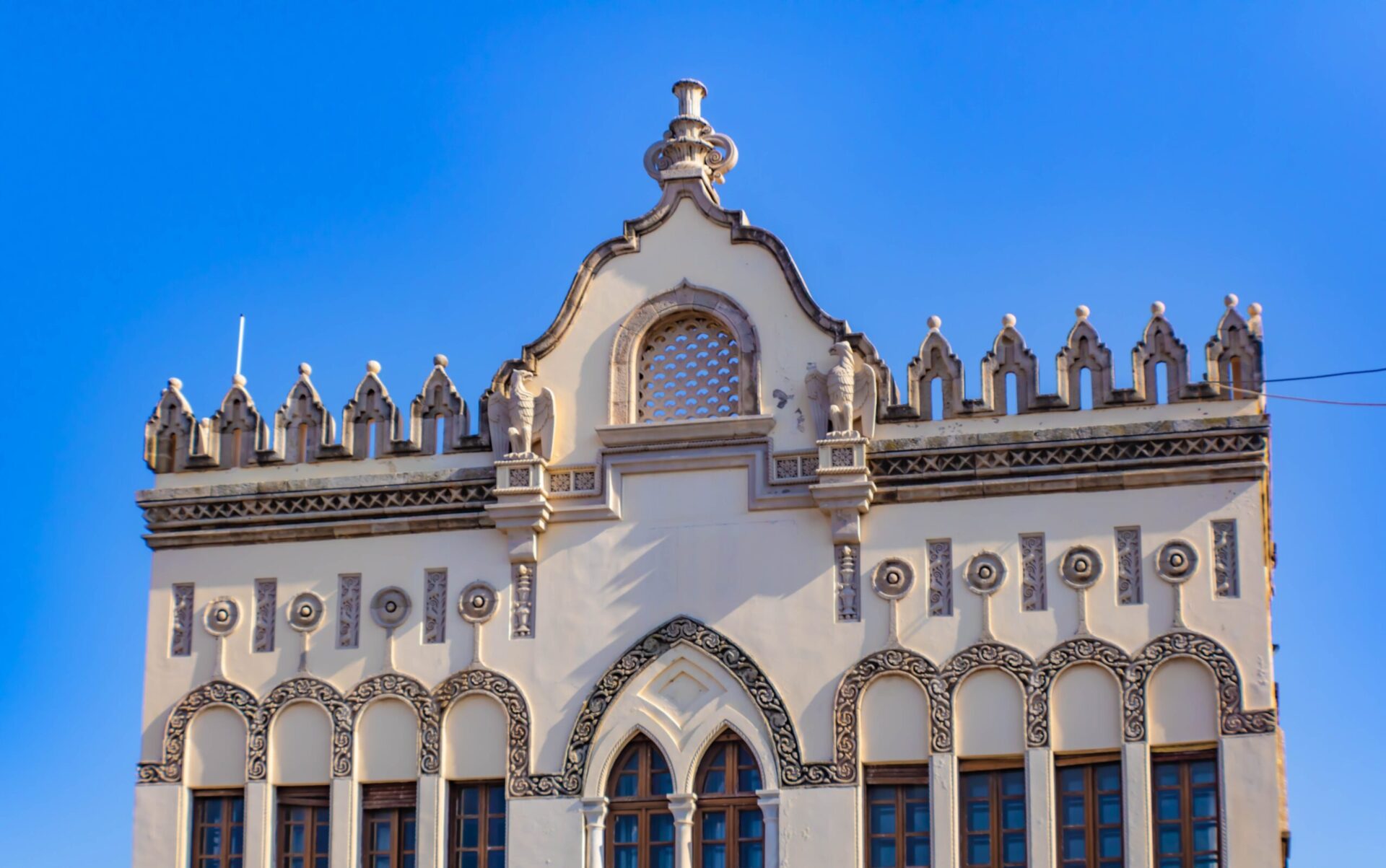
This political ambition found its most enduring expression through a sweeping urban redesign. The Italian architecture Rhodes inherited was not uniform; it was an experimental canvas that evolved from romantic historicism to austere state modernism. Architects like Florestano Di Fausto were tasked with completely transforming the capital outside the medieval walls.
Along the waterfront, they constructed the grand Governor’s Palace, utilizing Venetian Gothic elements, sweeping loggias, and intricate stone carvings inspired by the Doge’s Palace in Venice. Nearby, the Grande Albergo delle Rose combined late-art deco lines with orientalist flourishes. As the political climate hardened in the late 1930s, this decorative style shifted toward Rationalism, characterized by the clean, unadorned surfaces, heavy stone blocks, and geometric symmetry seen in the Nea Agora (New Market) and the main post office. This deliberate reconstruction created a monumental public zone that completely reoriented the spatial flow of the town center.
Tracing the Lasting Italian Influence in Rhodes
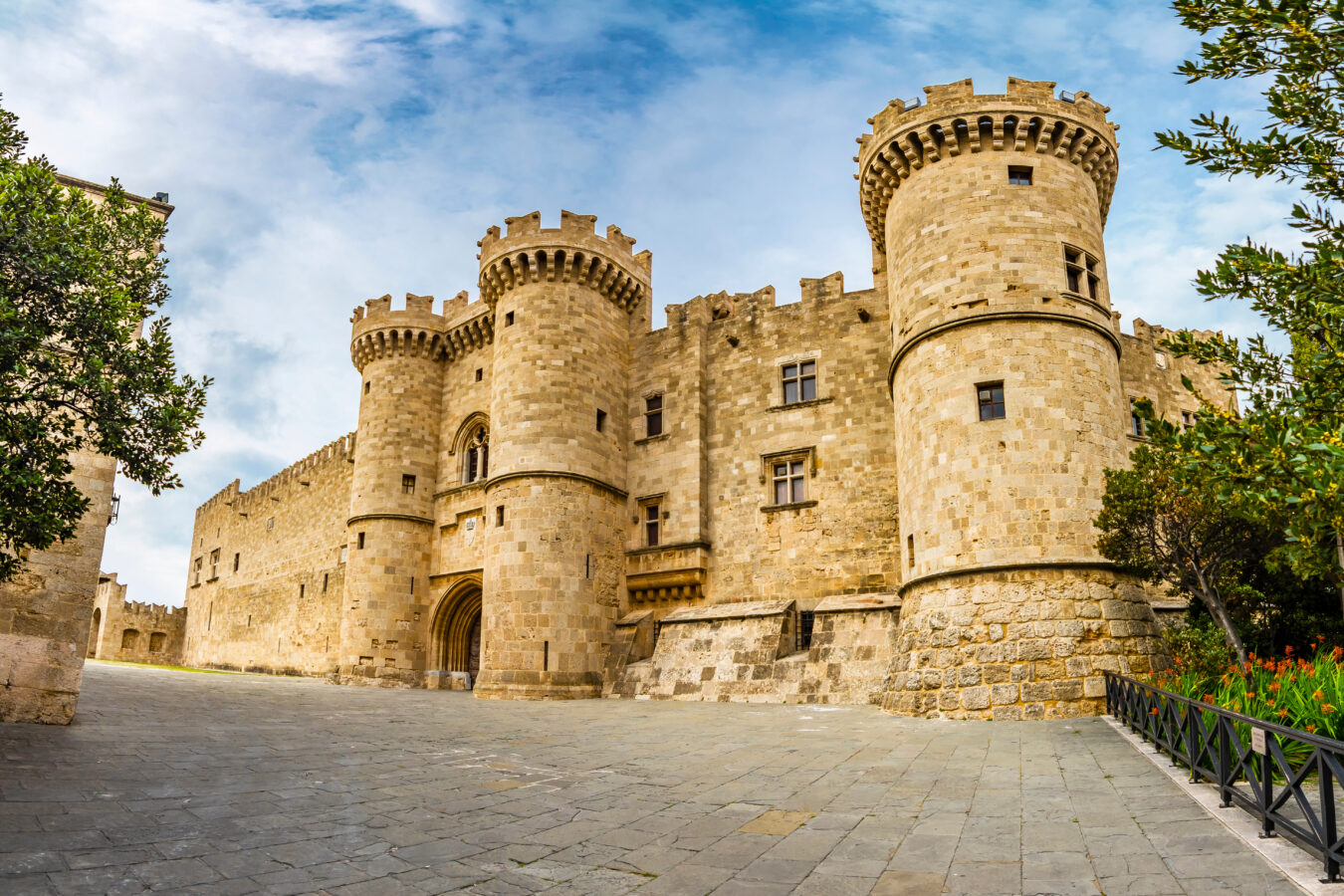
Beyond the construction of new administrative buildings, the broader Italian influence in Rhodes extended to massive restoration projects and landscape engineering. The most prominent example is the Palace of the Grand Master within the medieval walls. Left in ruins by a nineteenth-century ammunition explosion, the fortress was completely rebuilt by Italian engineers between 1937 and 1940 to serve as a grand summer residence for King Victor Emmanuel III and Benito Mussolini.
This sweeping architectural campaign extended behind the medieval ramparts, where the dramatic rebuilding of the Castles of Rhodes transformed the ruined Palace of the Grand Master from a forgotten shell into a regal monument. Strolling past these monumental coastal facades reveals how deeply twentieth-century ambitions altered the waterfront, adding a complex layer to the timeless Greek stories from Rhodes that define the harbor area today.
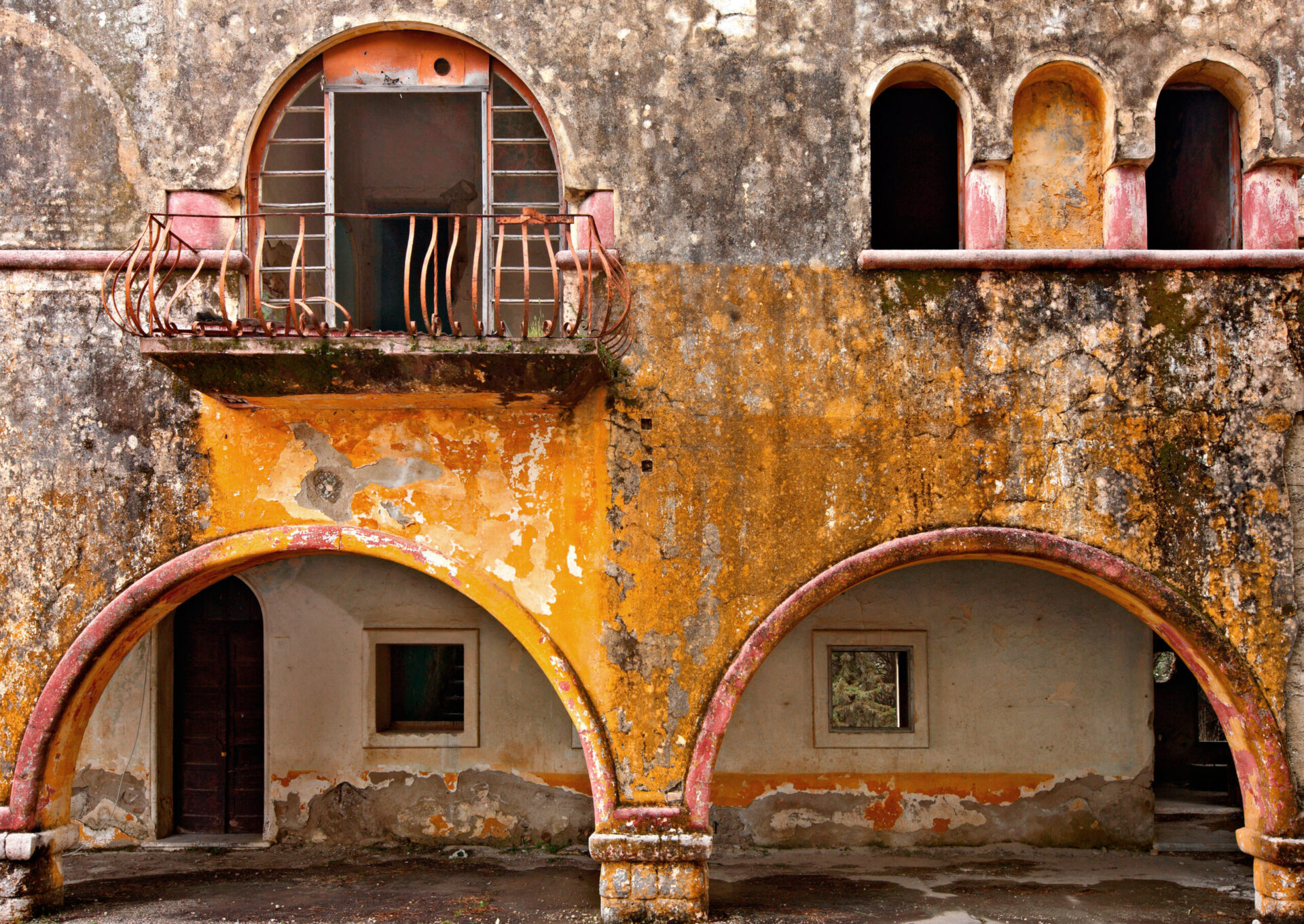
The administrative footprint also expanded well beyond the city limits. The authorities developed major infrastructure networks, carving out scenic coastal roads, reforesting mountain ridges with pine canopies, and building the elegant thermal spa complex at Kallithea. This civic vision reached deep into the mountainous interior, establishing planned agricultural outposts like Campochiaro, now known as Eleousa, with its unique alpine-style squares and sanitarium buildings, creating local landmarks that contrast sharply with the sun-warmed, stone-built villages of Rhodes found in the southern valleys.
Living Heritage Beyond the Stone
Today, this historical era is viewed by locals not as an erased memory, but as an integrated layer of the island’s multifaceted heritage. The wide boulevards, public parks, and coastal promenades laid down during the early twentieth century continue to dictate the physical flow of daily life in the modern capital. For the contemporary traveler, walking through these spaces offers a unique educational dimension, illustrating how different empires have used design to claim authority over the landscape, only for those very spaces to be reclaimed and reimagined by the enduring local community.