Experiencing the Changing of the Guard in Athens
Where, When & What to Expect
Plan your visit to the changing of the guard at Athens with local insights on Sunday versus weekday ceremonies, ideal arrival times, viewing spots, and photography tips.
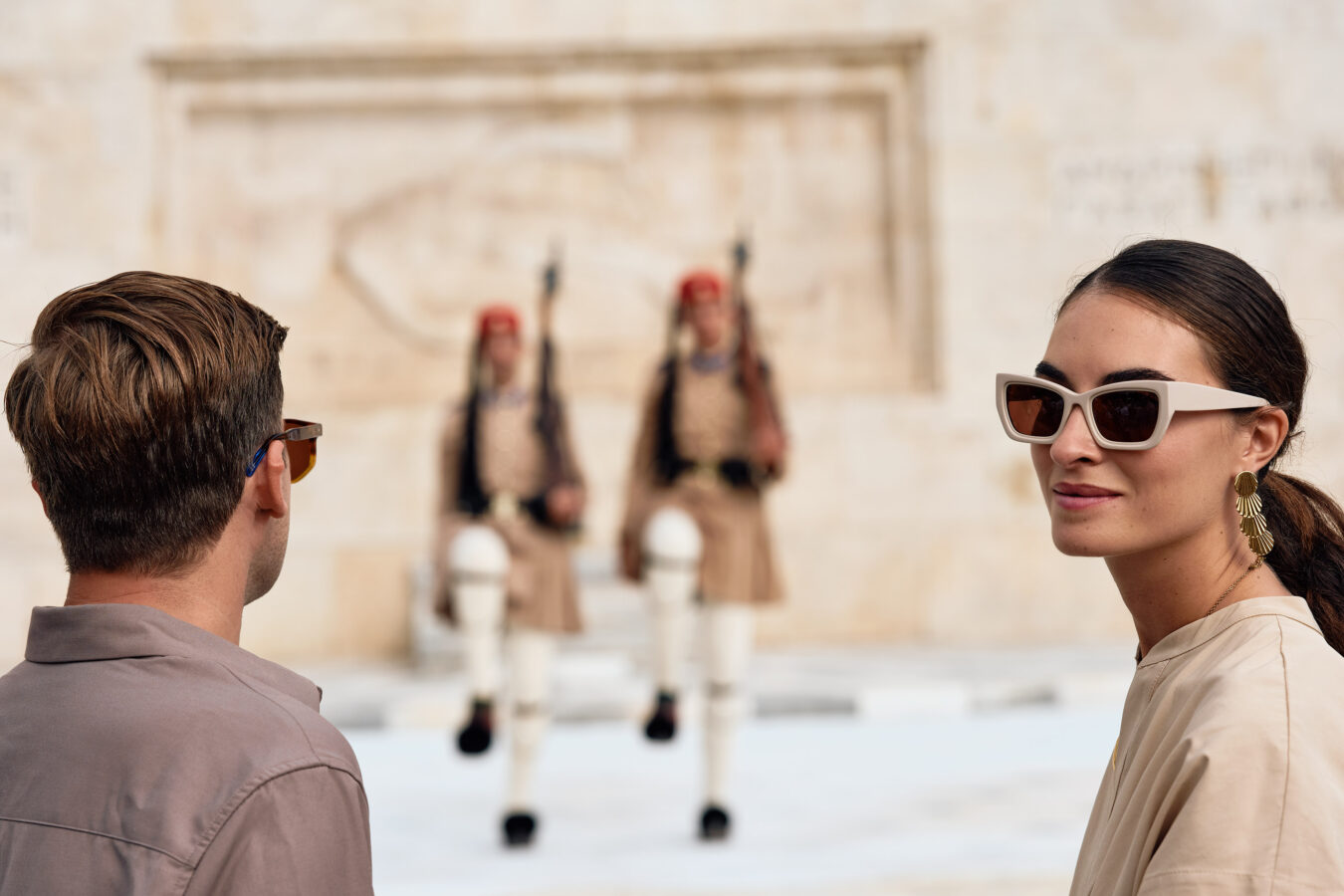
Every hour on the hour, the steady hum of central Athens pauses briefly as the sharp click of iron-shod clogs echoes across the marble forecourt of the Hellenic Parliament. Watching the ceremony of the changing of the guard in Athens is one of the Greek capital’s most accessible cultural rituals, taking place around the clock in every season. Whether you catch a quiet ten-minute handover during an afternoon stroll or plan your morning around the full Sunday parade, knowing how the schedule, uniforms, and viewing angles work turns a brief stop into a memorable highlight.
Witnessing the Changing of the Guard in Athens: A Practical Visitor’s Guide
Unlike monument visits that require advance tickets or timed entry slots, the Evzones Presidential Guard performs its duties on an open public terrace in the heart of the city. The ceremony honours the nation’s fallen heroes at the Tomb of the Unknown Soldier in Athens, a frequent ritual that happens right outside the Constitution Square of Athens.
Where It Happens: The Tomb of the Unknown Soldier and Constitution Square
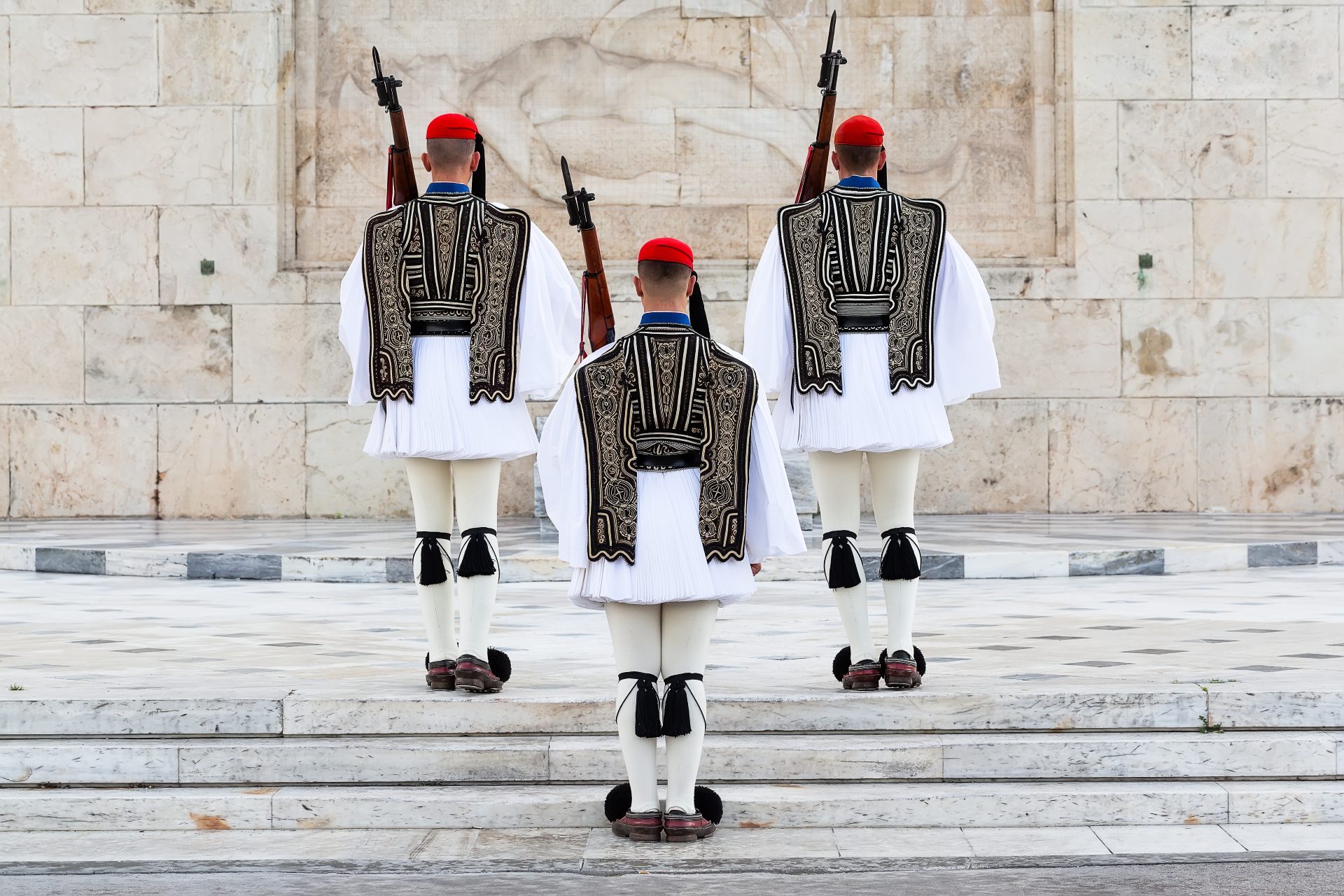
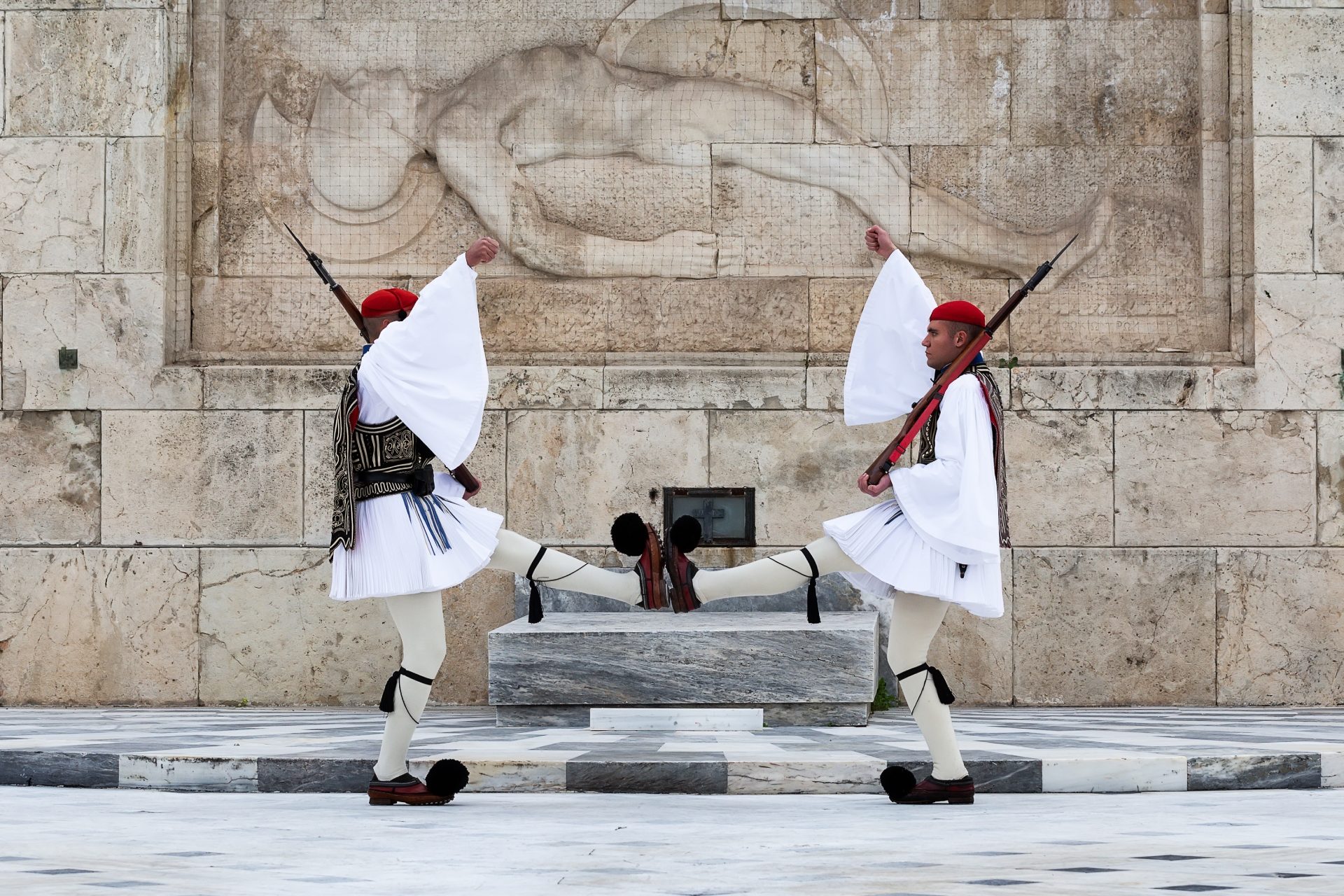
The ceremony takes place on the elevated marble forecourt directly in front of the Hellenic Parliament building, separated from the Constitution Square of Athens (locally known as Syntagma Square) by Vasilissis Amalias Avenue. Two sentry boxes frame the bas-relief sculpture of a fallen ancient warrior at the Tomb of the Unknown Soldier of Athens, where two Evzones remain completely motionless throughout their watch.
Reaching the terrace is straightforward from anywhere in the historic centre. Syntagma Metro Station (Lines 2 and 3) opens directly onto the square less than three minutes on foot from the monument, making the handover a natural anchor when spending a memorable day in Athens between the shaded paths of the National Garden, the pedestrian lanes of Plaka, and the shops along Ermou Street. Travelers strolling behind the National Garden can also see Evzones stationed outside the Presidential Mansion on Irodou Attikou Street, roughly a ten-minute walk away.
The Symbolism of the Foustanela and the Evzones Uniform
Seeing the Evzones in their full ceremonial attire on Sunday mornings offers a direct visual link to Greece’s nineteenth-century struggle for independence. Every element of the traditional uniform is handmade by specialized military tailors and carries deliberate historical meaning.
At the centre of the ensemble is the foustanella, the pleated white cotton kilt worn over white woolen stockings. Traditional tailoring incorporates 400 distinct pleats into the garment, each fold symbolizing one of the 400 years Greece spent under Ottoman rule before gaining independence. Around the torso, the guards wear a white shirt with wide, flowing sleeves beneath a heavily embroidered waistcoat known as the fermeli, whose intricate thread patterns vary according to rank.
The look is completed by the fareon, a crimson felt cap topped with a long black silk tassel representing the tears shed during centuries of occupation, and the iconic tsarouchia. These handcrafted red leather clogs are finished with black woolen pom-poms, originally designed to conceal small blades in close combat, and reinforced with sixty steel nails driven into each sole to produce the unmistakable rhythmic echo across the marble forecourt.
When It Happens: Weekday Hourly Change vs. Sunday Grand Ceremony
While the Evzones guard the monument twenty-four hours a day, the scale, uniforms, and musical accompaniment differ markedly between regular hourly handovers and the formal Sunday morning parade.
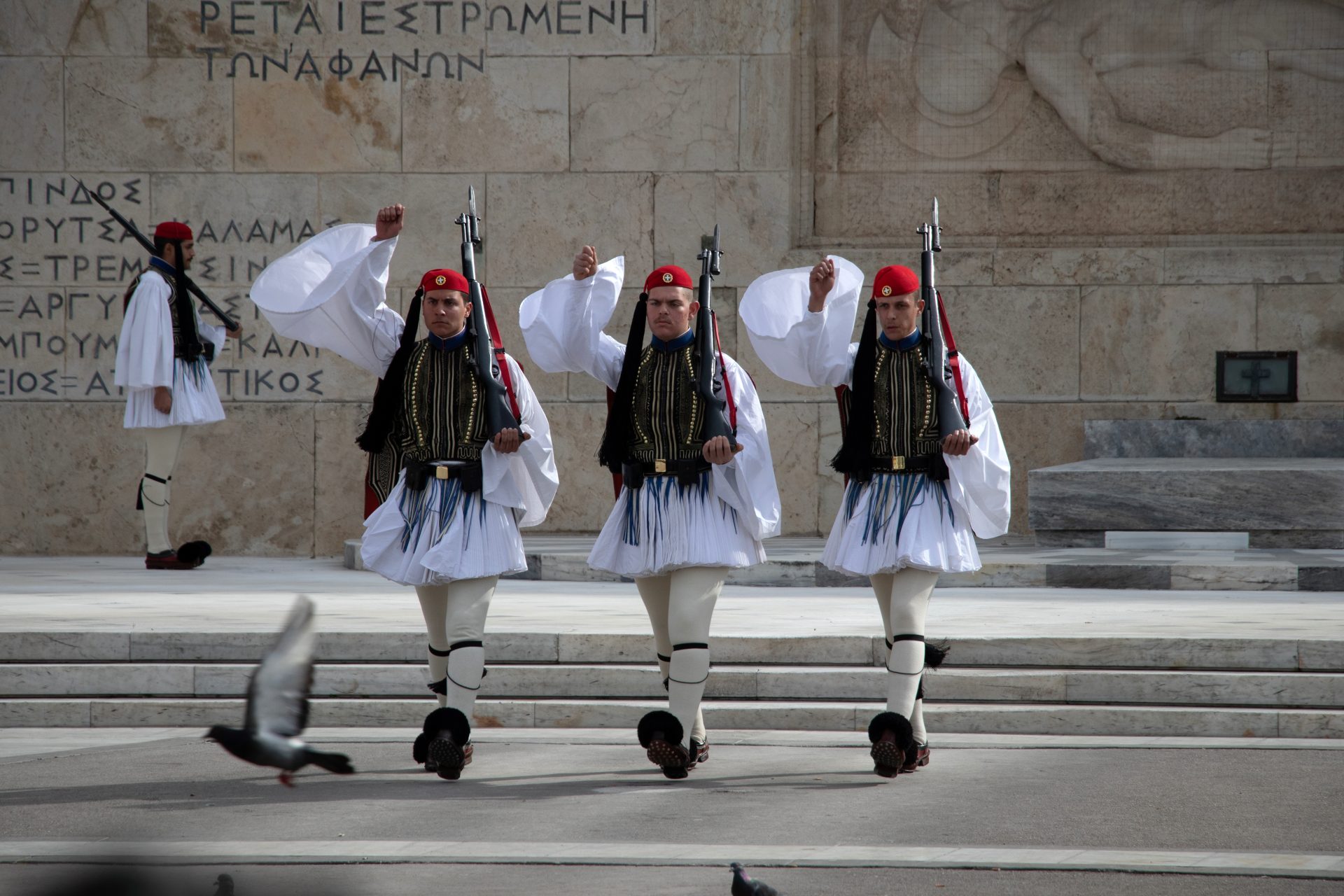
The Hourly Changeover (Daily, 24/7): Taking place every hour on the hour, this concise ten-minute ritual brings two incoming Evzones and a supervising corporal in a slow, synchronized, high-stepping march to relieve the outgoing pair. With no band present, the only soundtrack is the deliberate strike of nail-hammered soles of the traditional tsarouchia clogs against the marble paving. On regular weekdays, the guards wear seasonal service uniforms in khaki during warmer months or navy blue in winter.
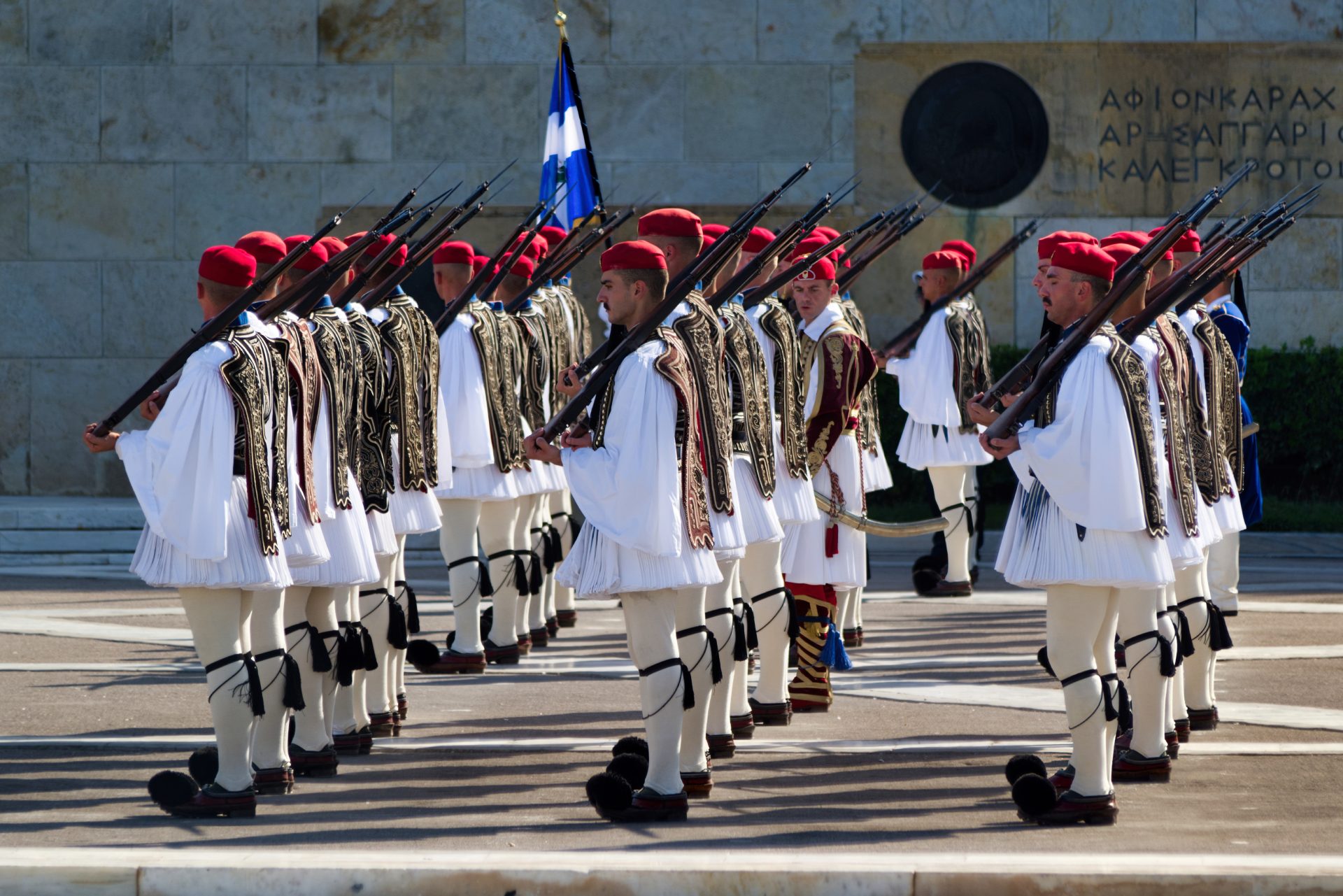
The Sunday Grand Ceremony (11:00 AM): Every Sunday morning at 11:00 AM, a full contingent of Evzones marches from their barracks along Vasilissis Sofias Avenue to the Parliament forecourt accompanied by a military brass band. Lasting roughly 35 to 45 minutes, this formal parade showcases the iconic ceremonial uniform featuring the white foustanella kilt with its 400 pleats, an embroidered waistcoat, and red-tasseled cap, reflecting a living civic tradition alongside the landmarks of ancient Athens history.
Tips on Watching the Changing of the Guard in Athens:
Where to Stand and When to Arrive
Because the handover begins promptly on the hour, positioning yourself early determines how clearly you see the drill, and how comfortable you remain while waiting.
Front-Left Perimeter Chain (Best for Hourly Handovers): Arrive ten minutes before the hour (such as 9:50 AM or 5:50 PM) to stand directly along the low chain barrier on the left side of the forecourt. This angle provides a clear profile view of both sentry boxes as the pairs mirror each other’s movements, with plenty of breathing room along the rail.
Vasilissis Amalias Avenue Side (Best for Sunday Parades): For the Sunday 11:00 AM ceremony, crowds gather several rows deep, so plan to be in place by 10:30 AM. Positioning yourself along the avenue edge of the forecourt lets you watch the full column and military brass band turn in from Vasilissis Sofias Avenue before taking their formations.
Shade and Pacing Strategy: The Parliament forecourt is open marble with no overhead cover. During warm midday hours, wait on the shaded benches across the road in Syntagma Square until ten minutes before the hour. Staying centrally at Titania Hotel Athens along Panepistimiou Avenue also places you within an easy ten-minute walk of the square, making it effortless to drop by for a quiet early-morning or floodlit evening handover without midday heat or crowds.
Photography and Respectful Etiquette
The ceremony of changing of the guard in Athens is open to photography, and a few simple habits ensure both great images and proper respect for the monument:
Target Softer Light: Before 10:00 AM and after 6:00 PM, lower sun angles prevent harsh glare off the white marble backdrop and keep the monument terrace cooler.
Respect the Perimeter Chain: Never step over the low chain barrier or climb onto the marble platform of the tomb. A supervising soldier in olive drab patrols the edge of the forecourt and will promptly ask visitors to step back if they cross the line or block the guards’ path.
Keep Distance During Photos: If you pose near a stationary sentry box between hourly changes, stand parallel to the guard at a respectful distance without attempting to speak to, touch, or distract the Evzone on duty.
Frequently Asked Questions
Does the Changing of the Guard in Athens take place in the rain or during winter?
Yes, the Evzones guard the Tomb of the Unknown Soldier twenty-four hours a day, year-round, in every weather condition. During cold or rainy winter weather, the guards wear heavy navy-blue wool overcoats during hourly changes while maintaining the exact same slow-step routine.
Are tickets or reservations required to watch the ceremony?
No tickets, reservations, or guided tours are required. Both the hourly handovers and the Sunday 11:00 AM grand ceremony take place on an open public forecourt in front of the Hellenic Parliament, so simply arriving ten to thirty minutes early is all you need for a clear view.
Do the Evzones wear different uniforms in summer and winter?
Yes, the Evzones alternate between two seasonal service uniforms for regular hourly watches depending on the time of year. During the warmer months, typically from May through October, the guards wear a lightweight khaki cotton tunic and trousers rooted in the history of the Macedonian Struggle. From November through April, they switch to a heavier navy-blue wool uniform inspired by the Balkan Wars, adding a thick navy-blue wool overcoat during cold or rainy weather, while reserving the white foustanela ceremonial attire for Sundays and national holidays.